
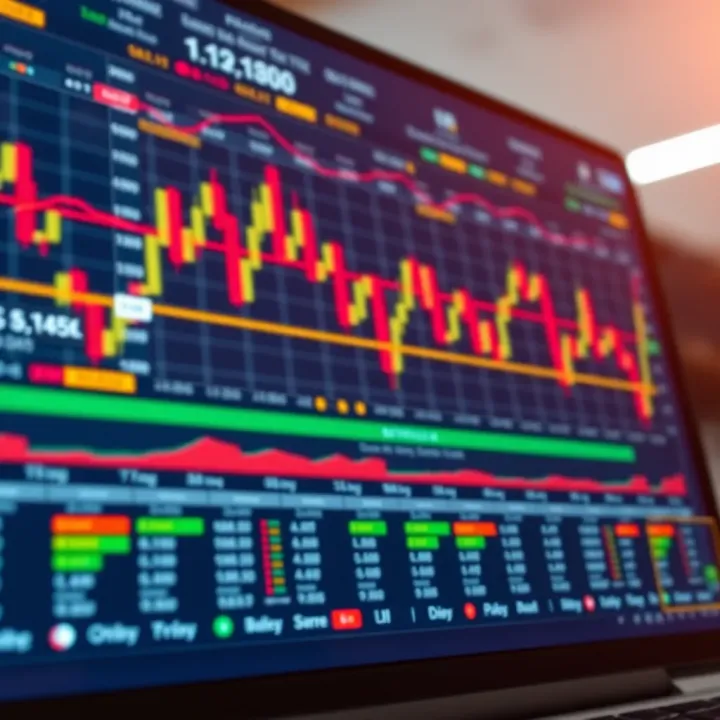
Choosing the Best Forex Trading Software
🔍 Explore how to pick the best forex trading software for Indian traders. Compare features, pricing, ease of use & reliability to match your trading style effectively.
Edited By
Thomas Reed
Forex trading is all about exchanging one currency for another in a global marketplace that operates 24 hours a day, five days a week. Think of it like swapping dollars for euros or yen for pounds, but on a massive scale involving banks, hedge funds, corporations, and individual investors. The goal? To profit from changes in currency values.
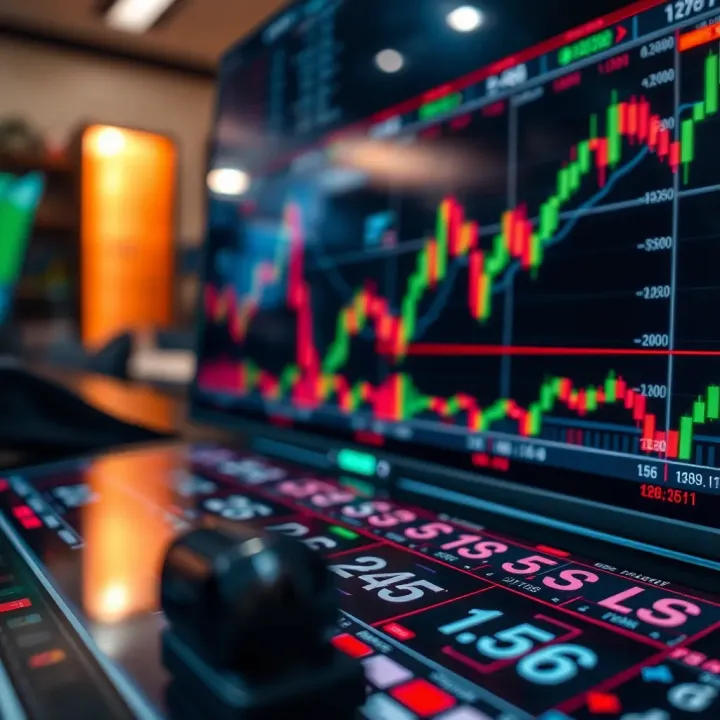
Currencies trade in pairs, such as EUR/USD or GBP/JPY. When you buy a pair, you're buying the first currency and selling the second. For example, buying EUR/USD means you believe the euro will strengthen against the dollar. Prices fluctuate constantly based on economic indicators, political events, interest rates, and market sentiment.
Pip: The smallest price movement in a currency pair, usually 0.0001.
Spread: The difference between the bid (buy) and ask (sell) price, essentially the broker’s fee.
Leverage: Borrowed capital that lets you control a larger position with less money upfront, increasing potential gains and risks.
The forex market offers high liquidity, meaning you can enter or exit trades quickly without affecting prices much. It also allows day trading, swing trading, and long-term investing strategies. Because it runs nonstop across global time zones, you can trade almost whenever it fits your schedule.
Mastering forex requires disciplined risk management. Many new traders jump in chasing quick wins but underestimate volatility and leverage risks.
Imagine you spot that the US Federal Reserve is hinting at raising interest rates. This often boosts the dollar's value. By going short on EUR/USD (selling the pair), you might profit if the dollar indeed strengthens. But if the market moves opposite to your bet, losses can stack quickly, especially if you've used leverage.
Getting started right means learning the basics thoroughly, practicing with demo accounts, and understanding how economic news drives prices. By building a strong foundation, you'll avoid costly mistakes and trade with confidence.
This guide will break down these elements step by step — from key strategies to risk controls — to help you make sense of the fast-moving forex world.
Grasping the basics of forex trading is essential before diving into this fast-moving market. Knowing what forex trading involves, who the main players are, and understanding the key currency pairs gives you a solid foundation. This foundation helps you make more informed decisions instead of relying on guesswork. For example, a trader who understands the roles banks play can better interpret sudden price shifts caused by large institutional moves.
Forex trading, short for foreign exchange trading, is the act of buying one currency while simultaneously selling another. It’s the biggest financial market worldwide, with daily trading volumes hitting $6 trillion. People and institutions trade currencies to profit from fluctuations in exchange rates or to hedge risks related to international business and investments. Picture a traveler exchanging dollars for euros at the airport — forex trading is that exchange, but happening on a massive scale 24/5.
The forex market operates as a decentralized global network, meaning there isn’t a single exchange like the New York Stock Exchange. Instead, it’s a web of banks, brokers, institutions, and traders connected electronically. Trades occur over the counter (OTC), mostly via electronic platforms or phone. Prices continuously fluctuate based on supply and demand, influenced by factors like economic reports, geopolitical events, and central bank policies.
Banks, especially big ones like JPMorgan Chase or Citi, handle the lion’s share of forex trading. They trade currencies both for clients and their proprietary accounts. Their trades can be enormous, affecting supply and demand drastically. For instance, when a bank hedges exposure on a large loan, it might sell or buy currencies worth millions, which can move the market temporarily.
Retail traders are individual participants who trade smaller amounts through brokers like FOREX.com or OANDA. Brokers provide access to the forex market by offering trading platforms and leverage, enabling traders to control larger positions with less capital. While retail traders account for a smaller market share compared to institutions, their collective activity still adds to market liquidity and volatility.
Central banks such as the Federal Reserve or the European Central Bank don't trade for profit but intervene to stabilize or steer their currencies. For example, the Fed might buy dollars if the currency falls too much, aiming to control inflation or support economic goals. Governments also influence the forex market via policies like capital controls or fiscal measures.
Forex trading always involves currency pairs — one currency is bought while the other is sold simultaneously. The first currency listed is called the base currency, and the second is the quote currency. The price indicates how much of the quote currency you need to buy one unit of the base currency. For example, if EUR/USD is 1.10, it means you need $1.10 to buy 1 euro.
Major currency pairs include EUR/USD, USD/JPY, GBP/USD, and USD/CHF. These pairs are highly liquid and generally have tighter spreads, making them favorites among traders. Minor pairs, like EUR/AUD or GBP/NZD, tend to be less liquid but may offer trading opportunities during less volatile periods. Each pair has its own behavior based on the economic health and policies of the involved countries. For example, USD/JPY can be very sensitive to US Treasury yields.
Understanding who trades, how the market operates, and the nature of currency pairs gives new traders the edge they need to navigate forex trading confidently.
Grasping how forex trading operates day-to-day is key to turning theory into action. This section breaks down the nuts and bolts, showing how traders interact with brokers, handle leverage, and use different order types to manage trades effectively.
Forex brokers act as the doorway into the currency markets. Choosing the right broker means considering factors like regulation, fees, spreads, and execution speed. For instance, a regulated broker licensed by the Commodity Futures Trading Commission (CFTC) offers some protection against fraud. On the other hand, unregulated brokers might offer tempting spreads but come with higher risks. It's wise to compare brokers’ transaction costs and user reviews before committing.
Trading platforms provide the interface where all the action happens. Popular platforms like MetaTrader 4 and 5, cTrader, and NinjaTrader offer tools such as real-time charts, technical indicators, and automated trading options. For example, MetaTrader 4 is favored for its user-friendly interface and extensive customizability. Picking a platform that fits your trading style can improve decision-making speed and efficiency.
Leverage allows traders to control positions much larger than their actual capital. In forex, a 50:1 leverage means you can control $50,000 with just $1,000 on margin. While this can amplify profits, it magnifies losses just as fast.
Using margin effectively requires strict risk discipline. It's tempting to max out leverage, but doing so without safeguards is like playing with fire. For example, over-leveraging can quickly wipe out your account if the market moves against you by just a small percentage. Many brokers provide margin calls and automatic liquidation to prevent negative balances, but it's best to manage risk proactively.
Market and limit orders are your primary tools for entering the forex world. A market order executes immediately at the current price, ideal for traders wanting quick entry or exit. Conversely, a limit order sets a target price to buy or sell, only activating when the market reaches that level. Suppose you want to buy EUR/USD only if it drops to 1.0800; a limit order helps you lock that in without watching prices every second.
Stop-loss and take-profit orders are crucial for managing risk and rewards. A stop-loss order automatically closes your position if the currency pair moves against you beyond a set point, protecting your capital from large losses. A take-profit order locks in gains once your target is hit. For instance, if you buy USD/JPY at 110.00, setting a take-profit at 112.00 helps you exit when your profit target is reached, securing your win.
Using the right orders and understanding leverage are what turn trading plans into actual results. They keep risk in check while letting you act quickly when opportunities pop up.
Every trader should practice these fundamentals in a demo before risking real money. That way, when it matters, you’re ready to operate smoothly in the fast-moving forex environment.
Developing effective strategies is essential for anyone serious about succeeding in forex trading. Without clear strategies, trading becomes a guessing game, often leading to avoidable losses. By sticking to tried-and-true methods like technical and fundamental analysis, as well as matching your style to your personality and goals, you can approach the forex market with discipline and better chances of consistent profits.
Understanding charts and indicators is the backbone of technical analysis. Traders use various charts—like candlestick or line charts—to visualize price movements over time. Indicators such as Moving Averages, RSI (Relative Strength Index), and MACD (Moving Average Convergence Divergence) help highlight market momentum and potential reversal points. For example, spotting when the RSI moves above 70 can signal an overbought currency pair, hinting at a possible pullback. This insight allows you to enter or exit trades with greater confidence.
Using trends and patterns rounds out technical analysis. Forex markets often move in recognizable patterns like head and shoulders, flags, or double tops/bottoms. Identifying an uptrend means you can focus on buying opportunities, while a downtrend might steer you toward selling. For instance, if a currency pair continuously forms higher highs and higher lows, it's a straight-up signal that buyers are in control. Spotting these patterns early can make the difference between a winning trade and a missed chance.
Economic indicators are at the heart of fundamental analysis. Reports like GDP growth, unemployment rates, and central bank interest rate decisions directly impact currency values. Take the U.S. Nonfarm Payroll report: a stronger-than-expected jobs number often boosts the U.S. dollar because it hints at a robust economy. Traders who monitor the economic calendar can anticipate these moves and position themselves accordingly.
News and global events can't be ignored either. Political shifts, trade disputes, or unexpected crises shake currency markets quickly. For example, when Brexit negotiations hit the headlines, the British pound swung wildly. Keeping tabs on news feeds and understanding their potential market impact lets traders react quickly rather than getting caught off guard.
Day trading and scalping suit traders who prefer rapid-fire decisions and quick profits. Day traders close all positions before the market closes to avoid overnight risks, often capitalizing on small price moves within a single day. Scalpers take it even further, making multiple trades within minutes or seconds. This style demands sharp focus and fast execution but can rack up gains when done right.
Swing trading and position trading offer a slower pace. Swing traders hold positions for several days or weeks, aiming to capture medium-term trends. Position traders think even longer—weeks to months—based on broader market moves. If you’re busy during the day or prefer less screen time, these styles fit better. They also tolerate more patience and less stress compared to scalp trading.
Successful forex trading depends greatly on choosing the right strategy that fits your knowledge, time availability, and risk appetite, rather than trying to follow every new trend out there.
Managing risks is the backbone of successful forex trading. Without a solid risk management approach, even the best strategies can lead to significant losses. Protecting your capital means having clear measures in place that stop a small setback from turning into a financial disaster. Traders who treat risk management seriously tend to last longer and perform more consistently.
Setting stop-loss levels is a fundamental tool that helps limit potential losses on any trade. Think of it as a safety net that automatically closes a trade if the market moves against you by a certain amount. For example, if you buy EUR/USD at 1.1200, you might set a stop-loss at 1.1150 to cap your loss at 50 pips. This prevents emotional decision-making during sudden market swings. Without stop-loss orders, a losing position could wipe out a large part of your account if the market drops quickly.
Calculating position sizes ensures you don’t risk more than you can afford on any single trade. The idea is simple: risk only a small percentage of your total capital per trade, often one to two percent. For instance, if you have a $10,000 account and risk one percent per trade, your maximum loss per trade should be $100. Position size will vary depending on your stop-loss distance. If your stop-loss is 50 pips, you adjust your lot size so that a 50-pip move equals $100 loss. This keeps your exposure manageable and protects you from big hits.
Recognizing biases means being aware of how your feelings affect your trading decisions. Humans tend to cling to losing trades hoping for a turnaround or jump into trades based on gut feelings rather than facts. For example, a trader might hold a losing position just because they don’t want to admit a mistake. Identifying such biases helps you stick to your plan and avoid impulsive moves that can drain your account.
Maintaining discipline and patience go hand in hand in forex trading. Discipline means following your trading rules without exceptions, even if a trade isn’t moving fast enough. Patience involves waiting for the right setup instead of forcing trades every day. For example, scalpers may trade frequently, but most swing traders wait days or weeks for an ideal opportunity. Sticking to your plan through ups and downs improves your chances of long-term success.
The bottom line is: managing risks and controlling your emotions make forex trading less about luck and more about consistent skill and strategy. These practices shield your capital and build a foundation for steady growth over time.
Starting forex trading marks the first practical step for any aspiring trader looking to engage with the currency market. This phase sets the foundation for all future trades and influences the success trajectory. Knowing how to properly set up your trading account and develop a clear trading plan avoids common pitfalls and gives you a stronger grip on the market dynamics.
Verification is the broker's way to confirm your identity, helping to prevent fraud or money laundering. You typically need to provide a government-issued ID, proof of address like a utility bill, and sometimes proof of income. This step ensures your account complies with financial regulations and protects your funds.
Funding your account requires choosing a payment method that suits you best, whether it's a bank transfer, credit card, or popular digital wallets like PayPal or Skrill. Each method comes with its own fees and processing times, so selecting one affects how quickly you can start trading. For example, credit card deposits are usually instant, while bank transfers might take a few days.
Demo accounts provide a risk-free sandbox to learn trading mechanics without risking real money. They mimic live market conditions closely, allowing you to practice order placements, study currency pair movements, and test strategies. This hands-on experience is invaluable before stepping into live trading. Many brokers, like IG or TD Ameritrade, offer these demo platforms.
Defining goals and risk tolerance is crucial for keeping your trades aligned with your financial situation and personality. Your goals might be to earn a steady monthly return, preserve capital, or become a full-time trader. Understanding your risk tolerance helps set how much of your capital you're willing to lose on a single trade. For instance, a common guideline is risking no more than 1-2% of your account balance per trade.
Tracking performance and learning from it completes the feedback loop every trader needs. Keep a trading journal logging entry and exit points, trade size, market conditions, and emotions during trades. This practice highlights what works and what doesn’t, allowing you to adjust strategies effectively. Over time, this disciplined approach turns experience into consistent improvement.
Remember: Forex trading isn't about quick wins but about steady, informed progress. Getting your accounts set up correctly and sticking to a well-crafted plan increases your chances to trade confident and smart.
🔍 Explore how to pick the best forex trading software for Indian traders. Compare features, pricing, ease of use & reliability to match your trading style effectively.
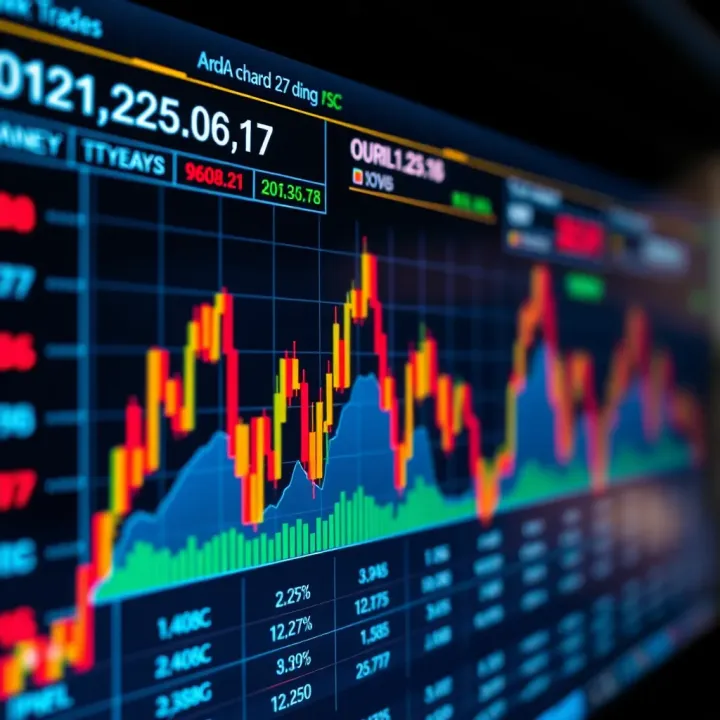
Explore online forex trading in India 📈. Learn about markets, platforms, strategies, risk control, and legal tips to trade smart and safe.
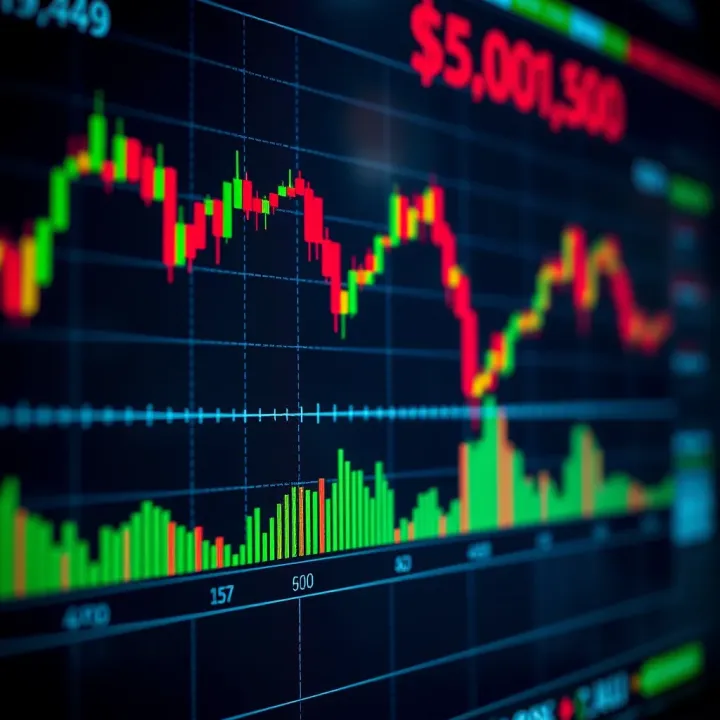
🌐 Explore online forex trading in India with our practical guide covering legal tips, startup steps, risks, and smart strategies for confident trading 📈
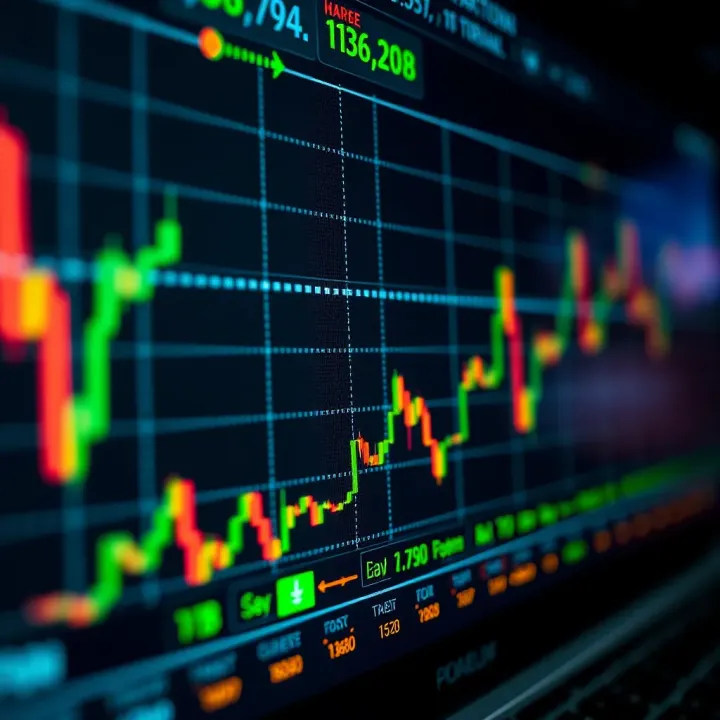
Learn live forex trading basics, strategies, risk tips, and platform selection 🔍. Stay ahead with real-time data and tackle challenges confidently! 📈
Based on 13 reviews