
Best Shares for Intraday Trading in India
Learn to pick the best shares for intraday trading in India 📈 by understanding liquidity, volatility, sector trends, risk management, and trading tools for smarter trades.
Edited By
Oliver Johnson
Intraday trading demands quick thinking and sharp execution. One of the key decisions traders face is selecting the appropriate time frame, as it directly influences entry and exit points, risk management, and overall strategy effectiveness.
Time frames in intraday trading refer to the specific intervals used for charting price movements—such as 1-minute, 5-minute, 15-minute, or even 30-minute charts. Each has its own rhythm and suits different trading styles and objectives.
For example, a trader looking for rapid trades might prefer 1-minute charts for razor-sharp precision, while another who wants to avoid noise yet still capture day moves may lean towards 15-minute charts. This choice depends on factors like market volatility, individual risk appetite, and the capital involved.
Choosing the right time frame isn't about picking the shortest or the longest interval—it’s about matching the frame to your mindset, market conditions, and trading goals.
Key considerations include:
Volatility: High volatility times call for shorter time frames to capitalise on quick price swings. During stable periods, longer frames help avoid false signals.
Trading Style: Scalpers usually operate on very short charts (1-5 minutes), while swing intraday traders tend to use 15-30 minute frames.
Experience Level: Beginners may find medium time frames manageable; very short frames can be overwhelming due to rapid decision-making.
In India, popular platforms like Zerodha Kite and Upstox provide easy access to multiple intraday time frames, empowering traders to test and find what works best.
Understanding how market behaviour aligns with different time intervals can improve timing, reduce stress, and enhance profitability. In subsequent sections, we will break down various time frames, how to choose among them, and practical tips tailored to Indian markets.
Time frames form the backbone of any intraday trading strategy. They refer to the specific intervals displayed on a price chart, such as one minute, five minutes, or fifteen minutes, representing the price movement within those periods. Understanding these helps traders decide how often they want to monitor and execute trades throughout the trading session.
For example, a one-minute chart shows price fluctuations every 60 seconds, while a thirty-minute chart aggregates data at every half hour. This granularity influences how sensitive your trades are to market changes and guides the pace of your decision-making.
Time frames essentially set the lens through which traders observe market movements. They range from very short intervals like one-minute charts, which capture brisk price swings, to longer periods such as hourly charts that smooth out brief fluctuations. These periods dictate the level of detail available, shaping how you spot trends, reversals, and entry or exit points.
Common intraday time frames include 1-minute, 5-minute, 15-minute, 30-minute, and 1-hour charts. Traders often choose these based on their preferred style and speed of trading. For instance, a scalper might thrive on 1-minute charts for quick trades, whereas a swing intraday trader may focus on 15 or 30-minute charts to filter noise and seek steadier signals.
There is a direct link between the chosen time frame and the frequency of your trades. Shorter time frames usually lead to more trades as they capture rapid price movements, while longer frames reduce trade frequency but tend to offer clearer signals. For example, trading on a 5-minute chart can result in multiple trades during market hours, whereas 30-minute charts might limit this to a handful of opportunities.
Time frames also affect how you manage risk and set profit targets. Quick trades on shorter frames demand tighter stop-loss orders due to higher volatility, often aiming for smaller but frequent gains. Conversely, longer time frames allow for wider stop-loss limits and potentially larger profit targets, reflecting steadier market behaviour. A trader on a 1-minute chart might set a stop loss of 10 points, while one on a 30-minute chart could afford a 30-point stop loss.
Choosing the right time frame balances your trading frequency and risk appetite, helping you stay comfortable and disciplined in your approach.
By grasping what time frames imply and how they shape your trading rhythm, you can better tailor your strategy to the unique demands of intraday markets. Whether you focus on rapid-fire scalping or steadier trades, understanding these intervals is essential for success.
Choosing the right time frame is key for intraday traders, as it directly affects decision-making speed, risk management, and profitability. Comparing popular time frames helps traders understand the nuances of each option and pick what fits their trading style and objectives. Indian traders, for example, often juggle between fast-moving stocks on NSE and more stable picks on BSE, so knowing the strengths and drawbacks of different charts matters.
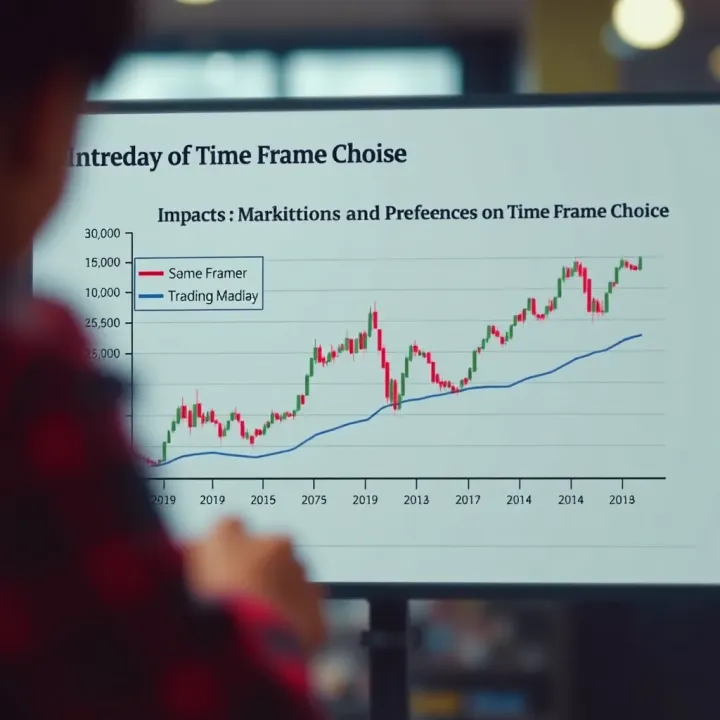
These charts are perfect for traders who want to capture quick price movements and make multiple trades within a session. The one-minute chart shows each minute’s price action, giving the trader a real-time snapshot. It works well for scalpers targeting small profits on volatile stocks like ITC or Reliance during peak hours.
However, the very speed of these charts comes with its own challenge. The short time frame picks up a lot of market noise—random price fluctuations that don’t reflect underlying trends. This can cause false signals, leading to frequent stop-outs or impulsive trades. For instance, sharp movements caused by large order executions might mislead a five-minute chart trader into thinking a trend is forming when it’s just temporary blur.
Fifteen and thirty-minute charts strike a better balance between detail and clarity. They filter out much of the noise present on shorter charts, while still providing enough granularity to act swiftly. As a result, these charts often give clearer trend signals, helping traders avoid whipsaws. For example, a trader focusing on banking stocks like HDFC Bank or ICICI Bank can spot intraday support and resistance levels more reliably.
These time frames suit traders who prefer moderate-speed trading. They allow enough time to analyse setups and manage risk without the pressure of rapid decision-making. This works well for those handling multiple trades during market hours or those who cannot watch the screen constantly but still want to stay active in intraday moves.
Hourly charts reduce trade frequency but enhance signal reliability. The longer time frame smoothes out intraday fluctuations and highlights substantive price trends. This relevance increases for traders who combine intraday trades with short-term strategies lasting a few days. For instance, a trader might use hourly charts to plan entry points in stocks like Tata Motors ahead of earnings and adjust during the day based on momentum.
Traders blending intraday and short-term tactics benefit from hourly charts as they provide a broader market context, helping avoid false breakouts common on lower time frames. They can time trades around key events, such as RBI announcements or quarterly results, with a steadier view of overall market direction.
Understanding popular time frames helps sharpen your trading approach by matching your style and goals with the right chart speed and signal quality.
In summary, one- and five-minute charts favor fast trades but suffer from noise; fifteen- and thirty-minute charts balance speed and clarity; hourly charts provide more reliable signals at lower trade frequency. Choosing the right frame depends on your trading pace, experience, and market conditions.
Choosing the right time frame for intraday trading depends heavily on a few key factors. These factors help shape your strategy and how effectively you respond to market conditions. The wrong choice could lead to missed opportunities or unnecessary risks, so understanding how your trading style, the market environment, and available technology interact with time frames is vital.
Traders who prefer scalping focus on very short-term trades, often lasting seconds to minutes. They tend to use one-minute or five-minute charts to catch small price movements quickly. Scalping demands constant attention and quick decisions, which suits traders comfortable with rapid pace and high trade frequency. For example, during the volatile morning session of the NSE, scalpers may execute dozens of trades within an hour.
On the other hand, swing intraday trading spans a longer period within the day, aiming to capture larger price swings. Such traders often prefer 15-minute or 30-minute charts to balance between detail and signal clarity. This style suits those who can manage fewer trades but with potentially larger profits per trade.
Experience plays a major role in time frame choice. Beginners often struggle with very short time frames because they need time to digest price action, manage emotions, and make rational decisions. They may find 15-minute charts more manageable, allowing a clearer view without being overwhelmed. Experienced traders, comfortable with rapid execution, can exploit one-minute charts effectively, as they recognise patterns quickly and have better control over psychological pressures.
Market volatility directly affects time frame selection. During sessions with high volatility – like after a Reserve Bank of India (RBI) policy announcement – tighter time frames like five-minute charts help catch sharp price moves swiftly. However, the noise in volatile markets can also create false signals, making it necessary to combine short time frame data with longer ones for confirmation.
Timing trades around key events, such as quarterly corporate results or government budget announcements, requires flexibility in time frames. Traders might shift to shorter charts just before such events to capitalise on sudden spikes or dips, then revert to longer time frames post-event when the market calms down. For example, many Indian traders watch the BSE Sensex and NSE Nifty closely during budget days, adjusting their strategies accordingly.
Access to real-time data can influence which time frame you can effectively trade. Platforms provided by NSE and BSE offer live streaming data essential for intraday choices. Without smooth, real-time updates, short time frames like one-minute charts become less practical as delays or lags could lead to costly mistakes.
Mobile trading has grown rapidly across India, allowing traders in tier-2 and tier-3 cities to participate actively. Mobile apps often have limitations on chart customisation or may update data with slight delays, which means traders relying on mobile devices might prefer 15-minute or 30-minute time frames over ultra-short ones. This consideration ensures trading remains manageable and less stressful, without missing critical trade signals.
Selecting your time frame should balance your trading approach, the market's state, and the technology you use. Adapting to these factors lets you exploit opportunities efficiently while managing risks.
By understanding these aspects, you can calibrate your intraday trading strategy to suit your personal comfort and the realities of the Indian market environment.
Choosing the right time frame is not a one-time decision but an ongoing process that requires practical adjustments based on your trading style and market behaviour. These tips provide a hands-on approach to help you find the time frame best suited to your strategy.
Backtesting strategies on various time frames is critical to understanding how your trading plan performs under different conditions. For example, a trader using a five-minute chart might find the strategy profitable over six months of historical data, but the same approach could falter on the fifteen-minute chart. Backtesting helps you identify the time frame that balances signal reliability with the desired trade frequency, avoiding guesswork.
Using demo accounts to experiment lets you test trades in real-time without risking your capital. Suppose you want to try scalping on a one-minute chart but are unsure if it suits your attention span or risk appetite. A demo account lets you experience live market conditions and assess if quick decisions feel manageable or stressful. This hands-on practice is vital before shifting to actual funds.
How time frames influence stop-loss and target placement is a key consideration. Shorter time frames typically require tighter stop-loss levels due to increased market noise; for instance, scalpers using one-minute charts might set stop-losses at a couple of points below entry. Longer time frames allow wider stops, giving trades more room to move. Understanding this helps in setting realistic profit targets and avoids premature exits.
Adjusting position size based on time frame also matters for effective risk management. Since shorter time frames expose you to more trades and quicker stop movements, position sizing might need to be smaller to keep potential losses within acceptable limits. Conversely, trades on longer time frames can afford larger positions since decisions develop over hours, allowing better control.
Market open and close timings in India impact trading opportunities significantly. The National Stock Exchange (NSE) operates from 9:15 am to 3:30 pm IST with a pre-open session starting at 9:00 am. These specific windows define when price action is most active and liquid.
Impact on time frame choice comes from recognising that volatility peaks near market open and close. Traders may prefer shorter time frames like five-minute charts during these periods for quick opportunities, while shifting to fifteen or thirty-minute charts mid-session when volume tapers. Being aware of these patterns can improve timing and outcome.
Practical time frame selection is about blending strategy, risk, and real market hours. Testing different frames actively and aligning choices with your risk tolerance and India's market rhythms will boost your intraday trading success.
Choosing the right time frame for intraday trading is a skill that demands careful consideration. Yet, many traders fall into certain common traps that hurt their performance. Avoiding these mistakes can help you build a consistent approach and prevent unnecessary losses. Let's examine some pitfalls and practical ways to steer clear of them.
Why consistency matters: Sticking to a chosen time frame allows you to understand market behaviour and your own trading patterns better. If you keep flipping between one-minute, five-minute, and fifteen-minute charts, it becomes hard to gauge which strategy truly works for you. For example, a trader switching mid-session from a five-minute to a one-minute chart may find their signals confusing and end up making impulsive decisions. Consistency helps build a reliable feedback loop, essential for refining your trading edge.
How switching can affect discipline: Jumping across time frames disrupts your trading routine, often leading to impatience or overtrading. Imagine a trader who starts the day on a fifteen-minute chart but, after seeing no quick gains, suddenly moves to a one-minute chart and then back again. This lack of discipline dilutes focus and increases stress, making it harder to follow a clear stop-loss or target strategy. Over time, this undermines confidence and can push a trader to deviate from their plan.
Selecting a time frame that matches your attention span: Your ability to concentrate for a certain period should guide your time frame choice. If you find it difficult to focus for long hours, using hourly charts may cause missed opportunities or delayed reactions. Conversely, someone with a sharp attention span might feel the five-minute chart lacks enough detail. For example, a trader juggling a full-time job might prefer a thirty-minute chart that requires less constant monitoring.
The risk of burnout with very short time frames: Trading on one-minute charts demands intense focus and quick reflexes, which can drain you fast. Many beginners underestimate the mental toll this takes. Burnout may lead to costly mistakes or skipping important setups. It is better to choose a time frame that you can manage comfortably without feeling worn out by midday. For instance, during the hectic monsoon days in Mumbai, keeping to a moderate time frame like fifteen minutes can help maintain alertness without exhaustion.
Staying consistent with your chosen time frame and aligning it with your concentration level can greatly improve your trading discipline and results. Overcoming these common mistakes is a step closer to mastering intraday trading.
By recognising these errors in time frame selection, you can tailor your approach to whatever suits your style, schedule and temperament. This way, your trading decisions will be clear, confident, and well timed.
Learn to pick the best shares for intraday trading in India 📈 by understanding liquidity, volatility, sector trends, risk management, and trading tools for smarter trades.

🕒 Find today's best stocks for intraday trading in India with tips on liquidity, volatility, & risk management to boost your chances of quick profits.

📈 Learn intraday trading basics in India with expert tips on market timings, risk management, and technical analysis. Start smart, avoid common mistakes! 💡

📈 Master intraday trading in India with this practical guide! Learn key strategies, risk management, market behavior, and effective tools for success.
Based on 5 reviews