
Intraday Trading Stocks List in India Explained
📈 Explore the list of stocks allowed for intraday trading in India. Learn selection criteria, access tips, and make smarter trades today! 💹
Edited By
Amelia Davis
Intraday trading in India requires choosing stocks that move enough within the trading day to offer profit opportunities, but also have sufficient liquidity so you can enter and exit trades quickly. Not all stocks fit this bill every day, so it's essential to identify the right candidates based on current market conditions.
Liquidity: Look for stocks with high trading volumes, often those actively traded on exchanges like NSE and BSE. Stocks in the Sensex or Nifty 50 indices generally have better liquidity as millions of shares change hands daily.
Volatility: A certain level of price movement is necessary to create profit chances during intraday moves. Stocks that have news events, quarterly results, or sectoral updates tend to be more volatile.
Price range: Avoid very low-priced stocks as they can be erratic and harder to predict. Focus on mid-cap and large-cap stocks that usually demonstrate more consistent price action.
Market trend alignment: Stocks moving in sync with the broader market or their sector’s trend often provide smoother trade setups.
Choosing today’s best stocks for intraday trading is about finding a balance between active volume and meaningful price swings while managing risks.
To spot these stocks, traders often use:
Pre-market scans: Many trading platforms offer pre-market filters showing high volume or gap-up/down stocks.
Technical indicators: Tools such as moving averages, Relative Strength Index (RSI), and Bollinger Bands help identify momentum and volatility.
News feeds: Keeping an eye on announcements and global market cues can highlight stocks likely to see big moves.
By focusing on liquidity and volatility, and by using real-time data and technical tools, you can shortlist stocks best suited for intraday trades today in India. This improves the chances of executing timely entries and exits with controlled risk.
Intraday trading involves buying and selling stocks within the same trading day. Traders aim to capitalise on short-term price movements, closing all positions before the market closes to avoid overnight risk. This style demands quick decisions, sharp observation, and a grasp of the elements that influence stock behaviour throughout the day.
Intraday trading means you act fast to benefit from the daily ups and downs of prices. For example, if a stock opens at ₹200 and by noon hits ₹210 due to strong buying interest, an intraday trader might sell at the peak before the price dips again. Unlike long-term investing, you don't hold on for dividends or corporate actions here — your focus is purely on short-term price moves.
Liquidity refers to how easily you can buy or sell a stock without affecting its price significantly. Stocks with high trading volume, like Reliance Industries or HDFC Bank during market hours, allow you to enter or exit positions swiftly. If you pick a stock with poor liquidity, you may struggle to sell at your desired price, which can eat into your profits or increase losses.
High daily turnover shows the stock attracts many buyers and sellers, creating a competitive market. This also means the bid-ask spread (difference between buying and selling price) tends to be narrow, reducing transaction costs for intraday traders.
Volatility captures how much a stock’s price moves in a given period. Intraday traders often look for stocks with enough volatility to grab decent price swings. For instance, a mid-cap stock that shifts 3–5% during the day can offer profitable entry and exit points if timed right.
However, too much volatility can be risky, creating sudden price swings that might hit stop-loss orders unexpectedly. The key is picking stocks with moderate to high volatility, providing enough movement without turning chaotic or unpredictable.
Market capitalisation affects how a stock reacts to market news and trends. Large-cap stocks like Infosys typically show steady movements influenced by broader economy and sector news. On the other hand, mid and small-cap stocks might have sharper, sometimes less predictable, intraday swings due to lower coverage and trading volume.
Sector trends also matter. If the banking sector is buzzing due to an RBI policy announcement, bank stocks are likely to show volatile intraday action. Traders who track such sector momentum can spot intraday opportunities more effectively. For example, during monsoon months, FMCG stocks often get a boost due to demand expectations, which influences intraday price moves.
Intraday trading is not just about picking any stock; it’s about finding those that combine liquidity, volatility, and sector relevance to suit quick trading strategies.
Understanding these core requirements helps you focus your trading on stocks that are active enough to profit from but not so erratic that they pose excessive risk.
When choosing stocks for intraday trading, having a clear set of criteria is vital. These help traders focus on shares that are likely to offer good price movements within a single trading session, reducing the risk and enhancing profit potential. Without a defined checklist, one might end up chasing illiquid or sluggish stocks, which often leads to losses.
Market trends provide the big picture of where the overall market or a specific sector is headed during the day. Traders should pay attention to index movements like the Nifty 50 or Sensex since broad market sentiment frequently sways individual stocks. For example, if the Nifty is sharply down due to global cues, even fundamentally strong stocks might show weakness.
News plays a significant role in driving intraday volatility. Corporate announcements, policy changes by the government, or quarterly earnings results can trigger quick price swings. Suppose a company announces a tie-up or receives a regulatory nod; this news could boost its stock sharply within minutes. Similarly, negative news such as profit warnings or regulatory fines often make shares volatile and active for day traders.
Moving averages smooth out a stock's price data over a specific period to reveal trends. The Simple Moving Average (SMA) or Exponential Moving Average (EMA) for short time frames like 5, 15, or 30 minutes help intraday traders pinpoint support and resistance levels during the day. For instance, if a stock price crosses above the 15-minute EMA, it may signal a bullish run.
Moving averages also help recognise trend reversals quickly. When short-term averages cross above long-term ones, it can be a buy signal for intraday traders. On the other hand, a cross below might indicate selling pressure.
The RSI measures a stock's momentum on a scale of 0 to 100 to highlight overbought or oversold conditions. An RSI above 70 suggests the stock is overbought and may see a price pullback, while below 30 implies oversold conditions and potential rebound.
For intraday trading, RSI on shorter time frames like 5 or 15 minutes provides quick signals for entry or exit. For example, if Reliance Industries shows an RSI of 75 during the morning session, traders might wait for a downward correction before buying.
Candlestick charts display price action with open, high, low, and close prices, creating patterns that provide clues about market sentiment. Specific patterns like Doji, Hammer, or Engulfing bars often indicate possible trend reversals or continuations.
For day traders, spotting a bullish engulfing pattern after a downtrend may suggest a strong buying opportunity for a quick gain. Conversely, a bearish engulfing pattern near a resistance level could signal exiting or short-selling.
Sector trends influence stocks collectively; a strong sector often lifts most companies within it. For instance, when the IT sector gains due to favourable global demand, Infosys and TCS usually rise together, presenting better intraday trading chances.
Economic factors like RBI interest rate decisions, inflation data, or fiscal policy announcements also affect which sectors perform well. For example, a cut in repo rate might spur banking stocks such as HDFC Bank and ICICI Bank to rally during the day.
In short, selecting the best stock for intraday trading today requires combining market context, technical signals, and economic insight. This approach equips traders to respond quickly and make informed decisions in India's fast-moving stock market.
Intraday trading demands swift moves, and picking the right stocks matters a lot. Popular stocks in India's market often offer the liquidity and volatility traders need to make profitable trades within the same day. These stocks not only have heavy volumes but also react quickly to news and market sentiments, making them ideal for those looking to capitalise on short-term price swings. Besides liquidity, traders must consider sector trends and individual stock behaviour to maximise gains.
Reliance Industries stands out as a go-to stock for many intraday traders. Its massive market capitalization and presence across energy, telecom, and retail create constant trading interest. Because Reliance impacts broad market sentiments, it usually witnesses high volume and volatility during market hours. For example, when new announcements surface, like Jio’s expansion or energy deals, price movement gains momentum quickly, providing good entry and exit points. Traders should track its performance around macroeconomic news and policy changes related to the energy sector.
HDFC Bank is another favourite bluechip stock for intraday trading. With a steady trading volume and consistent volatility, it balances risk and reward well. HDFC Bank often reacts to RBI policy announcements, interest rate changes, and quarterly financial results, creating predictable volatility spikes. Since it commands significant movement within active sessions, it provides multiple opportunities to scalp profits. However, traders need to keep an eye on overall banking sector health because sector-wide trends can influence HDFC Bank’s intraday price actions.
Infosys attracts traders especially due to its presence in the IT sector that is sensitive to global cues like US market movements and currency fluctuations. Its day-to-day volatility is typically moderate but intensifies around quarterly results or sectoral developments like government IT outsourcing policies. For intraday trading, keeping tabs on Infosys’s price behaviour during early market hours and after key announcements can be rewarding. Traders often combine technical tools with news tracking to exploit short-lived trends effectively.
While bluechip stocks offer stability, mid and small cap stocks may deliver sharper price moves, though with higher risk. These stocks can turn volatile on company-specific news, sector developments, or market speculation. Their lower liquidity means price swings can be more unpredictable but also more profitable if timed well. Traders should be cautious and filter stocks with sufficient daily turnover to avoid getting stuck in illiquid positions. Companies like Escorts Ltd or Jubilant FoodWorks occasionally show promising intraday moves, especially during sector rallies or earnings updates.
Identifying the right mix of popular bluechip and select mid/small cap stocks can help intraday traders balance risk and rewards while taking advantage of India’s diverse market dynamics.
Choosing the right tools and resources can make or break an intraday trader’s success. In the fast-moving Indian stock market, where every second counts, having access to reliable and real-time information is crucial. These tools help traders quickly spot stocks with high liquidity and volatility, enabling timely decisions and better risk management.
Real-time market data offers up-to-the-minute price changes, volumes, and bid-ask spreads. Indian traders typically rely on platforms like NSE and BSE for official live feeds. Besides, several third-party market data providers offer real-time data with added analytics.
Stock screeners are essential in filtering stocks that meet specific intraday criteria, such as minimum trading volume or price movement percentage. For example, a trader might use a screener to pick stocks with volumes above 1 million shares and intraday price swings greater than 2%. This narrows down the list to only active stocks worth watching.
Most screeners also allow filtering based on sector, market cap, or technical indicators like RSI and Moving Averages. This functionality saves valuable time, helping traders zero in on opportunities that meet their strategies within seconds.
Modern trading platforms from brokers such as Zerodha, Upstox, and ICICI Direct come packed with features tailored for intraday traders. They offer charting tools, technical indicators, and alerts that trigger when a stock hits a particular price or volume level.
Mobile apps make it even easier to keep track while on the move. Apps like Kite by Zerodha or Angel Broking’s TradeApp provide instant notifications, order placement options, and live market snapshots.
Besides convenience, these platforms often integrate news feeds, allowing traders to respond quickly to events affecting specific stocks or sectors. For instance, a sudden corporate announcement or RBI policy update can be spotted early, giving an edge in intraday decision-making.
Consistently using these tools equips you to act swiftly and smartly in today’s volatile market, reducing guesswork and improving your trading discipline.
In short, for intraday trading in India, combining real-time data, efficient screeners, and powerful trading platforms forms the backbone of a smart trading routine. These resources enhance your ability to pick the best stocks every trading session and help manage risk better.
Managing risks and maintaining discipline are vital for success in intraday trading. Unlike long-term investing, day trading demands quick decisions, and even small mistakes can lead to significant losses. This section highlights practical ways to control risk and cultivate discipline, helping traders avoid common pitfalls and protect their capital.
Using a stop-loss order is one of the most effective tools to limit losses during volatile intraday movements. A stop-loss automatically exits your position when the price hits a predetermined level. For example, if you buy a stock at ₹1,200 and set a stop-loss at ₹1,180, your loss is capped at ₹20 per share. Setting stop-loss levels based on technical support or resistance points can improve accuracy.
Position sizing complements stop-loss orders by defining how much capital you allocate per trade. Suppose your trading capital is ₹1 lakh, and you set a maximum risk of 2% per trade. Your maximum loss per trade would be ₹2,000. If your stop-loss is ₹20 per share, you should buy no more than 100 shares (₹20 loss × 100 shares = ₹2,000 loss).
Combining stop-loss and proper position sizing keeps losses manageable and prevents a single bad trade from wiping out your account. Traders often neglect this, risking too much on one trade, which leads to poor overall portfolio health.
Overtrading occurs when traders make too many trades in a short time or beyond their strategy guidelines. This practice increases transaction costs and heightens exposure to market noise rather than genuine opportunities. For instance, chasing every small price movement without clear signals can quickly erode profits.
Sticking to a predefined trading plan helps prevent overtrading. Set limits on the number of trades per day or establish entry criteria that must be met before taking a position. This structure reduces impulsive actions driven by fear or greed.
Emotional trading can cause rash decisions. For example, after a loss, some traders attempt to recover quickly by taking bigger risks, often worsening their position. Practising mindfulness and taking short breaks when emotions run high can restore clarity. Also, keeping a trading journal helps track mistakes and successes objectively.
Discipline and risk management are not optional for intraday trading; they are essential tools that safeguard your capital and enhance performance consistency.
By mastering stop-loss, position sizing, and avoiding emotional pitfalls, traders can build a strong foundation for intraday success in the Indian markets.
📈 Explore the list of stocks allowed for intraday trading in India. Learn selection criteria, access tips, and make smarter trades today! 💹
📈 Learn how to pick the best stocks for intraday trading in India! Understand liquidity, volatility, volume & sectors to make sharp, quick market moves.

📈 Learn intraday trading basics in India with expert tips on market timings, risk management, and technical analysis. Start smart, avoid common mistakes! 💡
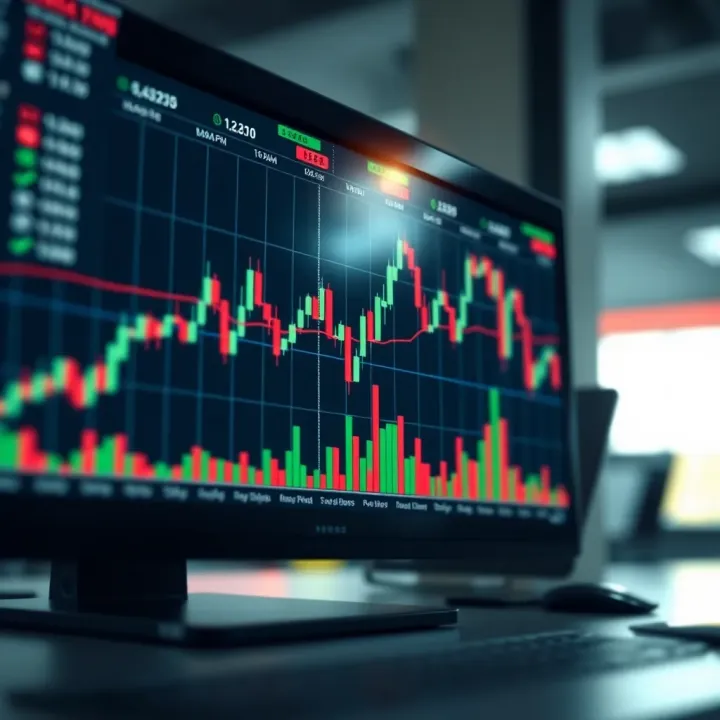
📈 Master intraday trading in India with this practical guide! Learn key strategies, risk management, market behavior, and effective tools for success.
Based on 5 reviews