
Choosing the Best Trading App for Indian Investors
📈 Discover how to pick the best trading app in India! Explore features, security, user experience & regulatory fit to boost your investments wisely.
Edited By
James Thornton
Paper trading apps are essential tools for investors who want to sharpen their skills without putting real money at risk. These apps mimic real stock market conditions, letting you buy and sell shares virtually. This helps both beginners and seasoned traders to experiment with strategies and understand market dynamics before committing capital.
In India, several apps provide reliable paper trading features that reflect the live Nifty and Sensex movements. Instead of just following theory or reading about trades, you get hands-on experience with virtual portfolios. For example, apps like Moneycontrol and TradingView offer simulated trading modules aligned with Indian exchanges, making them practical for our market context.
Paper trading helps you identify mistakes and improve decision-making without financial loss, making it a wise move especially in volatile markets.
These apps usually include features such as real-time market updates, historical data charts, and indicators. Some even allow you to set stop-loss and target prices, giving a real feel of trading discipline. Using these tools effectively can build your confidence and prepare you for live trading.
When selecting a paper trading app in India, consider factors like ease of use, accuracy of market simulation, educational content, and community features. Some platforms gamify the experience, adding leaderboard competitions, which can be motivating.
Practising with paper trading apps is not only for novices. Experienced traders test new strategies here before applying them in live markets, reducing potential losses. This hands-on approach also helps in understanding order types like limit, market, and bracket orders.
In the following sections, we will review the top paper trading apps available in India, comparing their features and usability. You'll also find tips on how to get the most from virtual trading so you can make smarter investment choices when you move to live trades.
Paper trading has carved a niche for itself, especially for investors in India who want to build confidence before committing real capital. It offers a risk-free environment to practice buying and selling stocks or other securities, helping investors understand market dynamics without the threat of losing money. This makes it an essential step for novices and even experienced traders testing new strategies.
Paper trading refers to the practice of simulating buying and selling financial instruments like shares, derivatives, or commodities without using real money. Instead, trades are recorded on paper or through digital platforms to track hypothetical gains or losses. For instance, a fresher interested in the stock market may start paper trading to get familiar with order placements and market timings before investing ₹10,000 from their savings.
This method provides a hands-on learning experience without financial risk. It also serves professionals who want to trial new strategies or tactics in different market conditions without risking their portfolio.
While paper trading mimics real trading closely in terms of price movements and order types, it misses out on the emotional elements involved with actual money on the line. Real trading involves managing stress, market volatility, and unexpected price gaps, which don’t affect paper trading.
Moreover, paper trading platforms may not perfectly replicate transaction costs, liquidity constraints, or slippage. For example, a paper trade might assume full execution at market price, but in real scenarios, large orders could move prices or face delays, affecting outcomes.
For Indian retail investors, paper trading reduces the fear of loss while learning stock market basics. Given that investing through platforms like Zerodha or Upstox involves account opening and understanding regulations set by the Securities and Exchange Board of India (SEBI), beginners can test the waters first without any real financial consequence.
Such a safe space lets investors experiment with diverse stocks, mutual funds, or options to understand risks and rewards practically. For example, a college student can try investing in blue-chip stocks during volatile festivals times without any real exposure.
Trying new trading strategies can be daunting as mistakes cost money. Paper trading lets you test strategies such as intraday trading, swing trading, or options hedging without losing a rupee. A trader in Mumbai might fine-tune entry and exit rules over weeks using virtual money to check profitability under different market scenarios.
This approach prevents costly blunders and builds a track record that boosts confidence for live markets.
Many Indian investors skip training and jump into markets, paying the price for lack of experience. Paper trading bridges this gap by providing practical exposure to concepts like order types, brokerage charges, market trends, and sector rotations.
It helps investors notice nuances like how Nifty or Sensex reacts to economic announcements or how currency fluctuations affect export-heavy stocks. As a result, users develop intuition that’s hard to gain from just reading books or watching news.
Paper trading is not just a practice—it’s a preparation ground that helps you refine your skills and avoid pitfalls when real money is at stake.
Overall, paper trading serves as a stepping-stone for investors in India, combining theory with practice to make market participation more informed and less intimidating.
Choosing the right paper trading app can make a huge difference in how effectively you learn and test your trading strategies. Not all apps simulate the market or provide tools equally. It's worth focusing on key features that match your trading goals and offer a realistic experience.

A clean, intuitive user interface is essential. If navigating the app feels like a maze, you’ll likely get frustrated or make mistakes unrelated to your strategy. Good apps offer clear dashboards, easy order placements, and simple navigation even for freshers. For instance, an app that separates equities, derivatives, and commodities clearly helps users switch between asset classes without confusion. Indian traders especially prefer apps that work smoothly on mobile devices with minimal lag, given our heavy mobile-first usage.
The quality of simulation matters a lot. Apps providing near-real market data and live price updates help users experience actual trading dynamics. Some apps offer delays of a few seconds for data feeds, which might be acceptable for beginners but less so for intraday traders. Real-time data can help you gauge volatility and test your reaction timings. However, some apps might randomise certain market conditions to mimic real-world unpredictability, which could mar perfect replication but enhances learning.
Having variety expands your learning and mimics the real market better. Let’s break down key instruments:
Equities are the backbone for many Indian investors. Your paper trading app should include a wide range of stocks from major Indian exchanges like NSE and BSE. Practising with actual stocks builds familiarity with price movements, liquidity, and sector performance. Equities trading simulation also helps get a grip on order types, limits, and execution scenarios common in Indian stock markets.
Derivatives like futures and options are popular among active traders and hedgers. A robust paper trading app should let you simulate these complex instruments, including options strategies such as covered calls or straddles. Understanding Greeks and expiry effects without risking capital makes a big difference. For example, practising with Nifty futures or Bank Nifty options helps gain insight into leverage and margin requirements common in Indian markets.
Commodities trading forms a significant part of India’s market. Precious metals like gold, base metals like copper, and agricultural commodities should be available for simulation. This exposure teaches how global events, monsoon cycles, and government policies impact prices. It’s especially useful for traders looking beyond stocks into broader asset classes.
Good paper trading apps provide charts, technical indicators, and detailed reports on your trading history. This data helps spot patterns, assess strategy success, and track risk. Features such as profit and loss summaries, drawdown analysis, and winning trade ratios make your practice more meaningful. Without these tools, you’d miss learning opportunities hidden in your trade behaviours.
Some apps link your paper trading account directly with your real trading setup. This helps ease transition when you start investing real money. For instance, Zerodha's Kite offers this integration, letting you switch modes smoothly while keeping track of performance. Integration also means you can test strategies on your actual watchlist and portfolio, making paper trading more relevant.
When picking a paper trading app, balance realism with usability. The more the app mimics real market conditions and trading environments, the better prepared you will be when going live with actual investments.
Overall, focusing on these features helps you select an app that aligns with your learning curve, investment style, and trading interests. This turns paper trading from a simple exercise into a powerful stepping stone toward confident investing.
Paper trading apps give you a platform to try out trading without risking actual money. For Indian investors, choosing the right app is crucial as it impacts how well you can simulate market conditions and learn. These apps differ in their features, market coverage, and usability, so knowing which ones are popular and have proven benefits helps you pick one that fits your needs.
Zerodha Varsity offers a comprehensive learning experience combined with Kite Connect Simulator, letting users familiarise themselves with stock market operations. Kite Connect closely mirrors live market conditions, including real-time data on equities and derivatives. This pairing makes it convenient for learners to apply theoretical concepts from Varsity straight into simulated trades. Investors get the feel of actual order placements and market reactions, enhancing their readiness.
While the Varsity content is highly educational, the Kite Connect Simulator has limited functionality compared to live trading, especially with smaller access to advanced analytical tools. Some users find the simulation not fully replicates the emotional pressure or liquidity constraints of real trades. Additionally, access requires creating a Zerodha account, which might deter casual users.
Upstox Pro Simulator provides an intuitive trading environment with an interface similar to their real trading app. It supports stocks, derivatives, and commodities, offering useful charting tools and indicators for analysis. This helps traders test a variety of strategies and get accustomed to order types and market timing, improving their confidence before dealing with actual funds.
The app stands out for its straightforward setup and access, appealing to beginners and experienced traders alike. Since Upstox is a well-known broker, the simulator integrates smoothly with its platform, making transitions to real trading easier. The app also supports mobile and desktop, catering to users with different preferences. However, to use the simulator, you typically need to register for an Upstox account.
Tradezilla focuses on simplicity with a clean, user-friendly design that suits those new to trading. Its paper trading feature is embedded within a broader trading platform, making navigation intuitive without overwhelming the user with too many options. The interface uses colour coding and straightforward dashboards to help keep track of open positions and trade history easily.
Tradezilla allows users to monitor their performance closely, offering detailed reports on profits, losses, and portfolio diversification. These analytics aid investors in identifying recurring mistakes or strengths in their strategies. Its tracking system, though not as advanced as some other platforms, offers enough data points to guide learning effectively.
NSE Paathshala targets learners who want a solid foundation in trading basics backed by the National Stock Exchange (NSE). The app combines theory lessons with virtual trading to strengthen understanding. This makes it especially useful for students and freshers who want to absorb market fundamentals before investing real money.
The app uses actual market data to replicate trading conditions as closely as possible, capturing price fluctuations and order book changes in real-time. Although it may lack certain sophisticated trading features, the simulation provides a reliable playground for beginners to get the timing and decision-making right without financial risk.
Choosing the right paper trading app hinges on your learning style and trading goals. Whether you want in-depth analytics, ease of use, or comprehensive education, these popular Indian platforms offer practical options to sharpen your skills safely before stepping into the real market.
Paper trading is more than just a risk-free way to practise investing—it’s a chance to build discipline, sharpen techniques, and prepare yourself for real market conditions. To truly benefit, you must approach it with clear objectives, systematic tracking, and a plan to transition confidently into actual trading.
Start with clear, achievable goals. Rather than aiming to hit a perfect score or win every trade, focus on mastering specific skills such as reading market trends, placing stop-loss orders effectively, or testing new investment strategies. For example, you might set a target to improve your timing for buying and selling shares within a month. Also, impose limits on your simulated portfolio size and trading frequency to mimic real-life constraints. This prevents unrealistic habits like trading excessively or risking amounts far beyond what you would in reality.
Consistently keep track of your trades and outcomes to identify patterns in your decision-making. Most paper trading apps provide detailed reports on gains, losses, and trade history—use these for honest self-review. Note not only where you made profits but also why certain trades failed. For instance, if you experience losses mainly due to poor risk management, focus on tightening your stop-loss strategies. The key is to treat your virtual trading like actual investing, reflecting on errors without the cushion of unlimited risk.
The emotional side of real trading can’t be fully captured by paper trading. When real money is involved, fear and greed often influence decisions more than logic. You may hesitate to sell a losing stock or get impulsive when seeing quick gains. Recognising this emotional shift helps you prepare mentally. Practise mindfulness or set strict trading rules beforehand to handle pressure. Real trading introduces stress that’s hard to replicate virtually, so being mentally ready for it is essential.
Simulated environments sometimes lack the full complexity of real markets—their liquidity, slippage, or sudden news impact can differ. When moving to actual trades, you need to adapt your strategy to these factors. For example, a plan that worked well in a simulator with immediate order execution might falter if real orders delay due to market volatility. Stay flexible and continuously evaluate your approach by comparing expected versus actual results. Adjusting for real market conditions ensures your strategy remains practical and profitable.
Using paper trading smartly requires more than just clicking 'Buy' and 'Sell'. Set clear goals, track progress carefully, and prepare for the emotional and technical challenges of live trading to increase your chances of success.
Paper trading apps serve as helpful tools for investors to practice and refine their investment strategies without risking real money. However, it is necessary to understand their limitations to avoid unrealistic expectations or mistakes when moving to real trading.
Paper trading lacks the emotional pressure involved when actual money is at stake. For example, a trader might confidently hold a losing position in a simulator, but when real capital is involved, fear of loss often triggers premature selling. This emotional gap can lead to behaviour differences—overtrading or indecision—that paper trading does not replicate. The calm environment of simulated trading may lull investors into an overly confident mindset, which does not prepare them adequately for real market stress.
Simulated platforms depend on historical or delayed market data, lacking the instant execution, slippage, and liquidity constraints experienced in live markets. For instance, while the app might show an ideal buy price, real orders can execute at a different price due to market volatility or low volumes in certain stocks. Moreover, sudden news events, circuit breaks, or technical glitches rarely get mimicked accurately. Such gaps can skew the perceived effectiveness of strategies tested in paper trading.
Repeated success in a risk-free environment may lead to overconfidence. Traders might believe their strategies are foolproof, ignoring market uncertainties and underestimating potential losses. This false sense of security can result in bigger positions or riskier trades once real funds are involved. Being mindful of this psychological pitfall is essential to maintain discipline and risk management when transitioning to actual trading.
Understanding these limitations is key for Indian investors using paper trading apps. Balancing practice with caution ensures that the transition to live trading is smoother and less prone to costly errors.
By recognising these drawbacks, investors can better calibrate their expectations and prepare for the emotional and market realities of real trading, making paper trading a valuable but not foolproof training ground.
📈 Discover how to pick the best trading app in India! Explore features, security, user experience & regulatory fit to boost your investments wisely.

Explore top online trading apps in India 📱 – features, costs, security, and regulations explained. Choose the best platform for your investing success today!

Find the best trading app for Indian investors 📱. Compare fees, security, usability & support to pick the right platform for your investment needs.
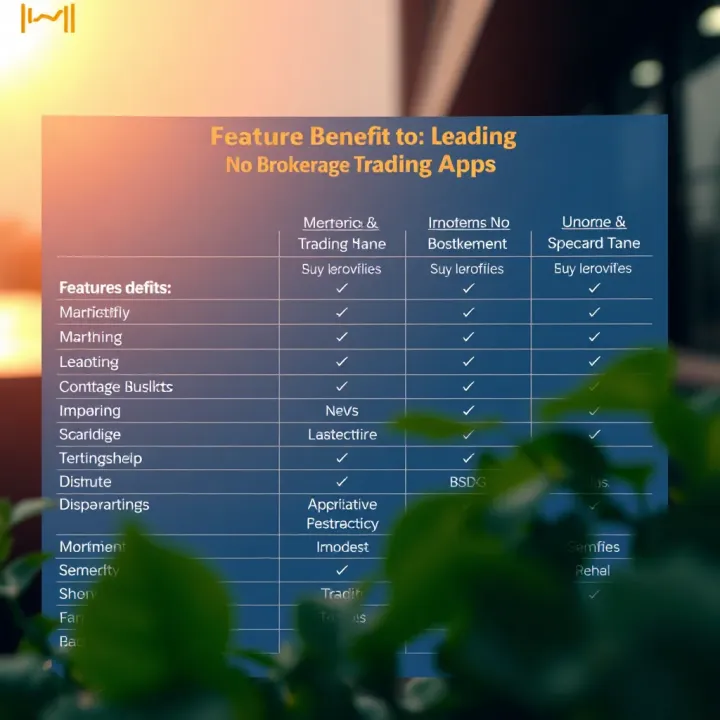
Discover no brokerage trading apps in India 📱: features, pros & cons, cost details, top choices, and smart tips every investor should know before trading.
Based on 15 reviews