
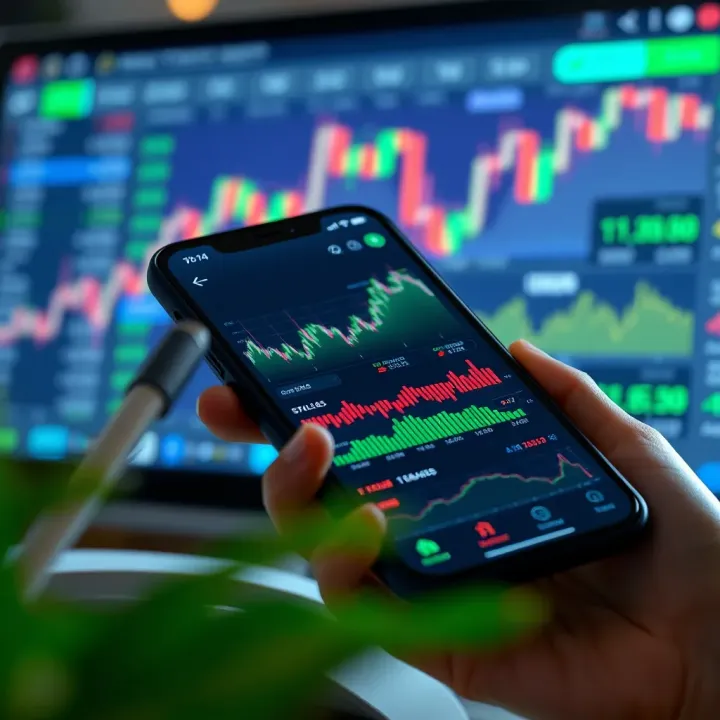
Best Trading Apps for Indian Investors in 2024
Find the best trading app for Indian investors 📱. Compare fees, security, usability & support to pick the right platform for your investment needs.
Edited By
Sophia Mitchell
Forex trading, also known as foreign exchange trading, involves buying and selling currencies to profit from changes in exchange rates. For Indian investors, understanding the basics of forex trading can open new avenues for diversifying portfolios and tapping into global markets.
Unlike stock markets operating within national borders, forex operates 24 hours across different time zones, making it the largest, most liquid market worldwide. Indian traders commonly deal with currency pairs such as USD/INR, EUR/USD, and GBP/USD — where one currency is exchanged against another.

Getting started requires knowing core terms like "pip" (the smallest move a currency pair can make), "leverage" (borrowing funds to increase trading position), and "spread" (difference between buying and selling prices). Understanding these concepts is crucial since forex trades can amplify both profits and losses.
The key to successful forex trading lies in grasping market dynamics and managing risks effectively.
To begin trading, an Indian investor must set up an account with a broker authorised by the Securities and Exchange Board of India (SEBI) or access international platforms that comply with Indian regulations. Trade execution can be through spot forex markets or derivative instruments like currency futures.
Risk factors include exchange rate volatility, geopolitical events, and leverage misuse. For instance, high leverage may boost gains but can also wipe out capital quickly if the market moves against you.
This guide will walk you through practical strategies, risk management techniques, and the regulatory framework shaping forex trading in India. With this knowledge, you can approach forex markets well-informed, ready to evaluate opportunities, and aware of potential pitfalls.
Clear explanations of how the forex market functions
Step-by-step instructions for starting your first trade
Examples of trading strategies suitable for different risk profiles
Overview of SEBI rules and compliance relevant to Indian investors
Understanding these fundamentals can help you make smarter, confident decisions as you explore forex trading in India.
Understanding the forex market is essential for anyone looking to trade currencies, especially Indian investors venturing into this space. This knowledge helps you grasp how forex operates worldwide, the factors influencing currency prices, and the risks involved. Without this, you might find yourself making decisions based on guesswork rather than facts.
Forex trading refers to buying and selling currencies with the goal of making a profit from changes in exchange rates. For example, if you expect the US Dollar (USD) to strengthen against the Indian Rupee (INR), you can buy USD/INR currency pairs and sell them later at a higher rate. This differs from stock trading because here you trade one currency against another, not shares of a company.
Currency pairs are the foundation of forex trading. Each pair shows how much of the quote currency you need to buy one unit of the base currency. Taking EUR/USD as an example, EUR is the base currency, and USD the quote currency. If the EUR/USD rate is 1.18, it means 1 euro equals 1.18 US dollars. Understanding this helps you decide when to enter or exit trades based on your view of currency movements.
Exchange rates are more than just numbers; they reflect the economic health and geopolitical scenario of countries. A rise in exchange rates indicates a stronger base currency relative to the quote currency, which can impact imports, exports, inflation, and investment flows. For an Indian investor, following the exchange rate fluctuations of INR against major currencies like USD or EUR is crucial because it affects the value of your profits and losses.
The forex market is unique since it operates 24 hours a day during weekdays, thanks to global time zones overlapping. This means you can trade currencies at any time, from early morning in Mumbai to late evening in New York. This continuous cycle allows Indian traders to respond instantly to global events such as RBI policy changes or US Federal Reserve announcements without waiting for market openings.
Several major forex centres influence price movements relevant to Indian traders. The primary hubs include London, New York, Tokyo, and Singapore. For instance, the London session sees high volatility in currency pairs involving GBP, while the New York session impacts USD pairs. Knowing when these markets open or close helps you plan your trades better and avoid times when the market is less active.
Different players operate within the forex market, each with distinct roles. These include commercial banks, central banks (like RBI), hedge funds, corporations, and retail traders such as individuals in India. Banks often facilitate large trades and provide liquidity, while central banks intervene to stabilise their currency. Meanwhile, individuals trade through brokers, attempting to profit from price changes. Knowing about these participants clarifies why prices move and where liquidity comes from.
Understanding these basics arms you with the ability to make smarter trade decisions rather than relying on luck or hearsay. It's not just about buying and selling currencies but appreciating how the whole market ticks around the clock.
Understanding core forex trading concepts is essential for Indian investors stepping into the market. These terms help interpret market movements, manage risks, and make informed decisions. Let's explore some of the key concepts that form the backbone of forex trading.
In forex trading, currencies are quoted in pairs. The first currency is the base currency, while the second is the quote currency. For instance, in the pair USD/INR, the USD (United States Dollar) is the base, and the INR (Indian Rupee) is the quote currency. This means the price shows how much one unit of USD costs in INR. Understanding this helps you determine whether you are buying or selling a currency, crucial for planning trades.
Major pairs always include the USD and currencies of strong global economies like EUR (Euro), GBP (British Pound), and JPY (Japanese Yen). Examples include EUR/USD and GBP/USD. These pairs usually have higher liquidity and tighter spreads, making trades cheaper and faster.
Minor pairs don't involve the USD but include other widely traded currencies like EUR/GBP or AUD/NZD. Exotic pairs combine a major currency with a currency from a smaller or emerging economy, for example, USD/THB (Thai Baht) or USD/ZAR (South African Rand). Exotic pairs tend to have lower liquidity and higher volatility, so risk management becomes critical when trading them.
A pip (percentage in point) is the smallest price move in a currency pair, commonly the fourth decimal place (0.0001). For example, if USD/INR moves from 75.5000 to 75.5005, that’s a 0.5 pip movement. Knowing pip value helps traders measure profit or loss accurately as it quantifies price changes clearly.
Trades happen in units called lots. A standard lot is 100,000 units of the base currency—quite large for many individual traders. Smaller sizes like mini lots (10,000 units) or micro lots (1,000 units) allow more flexibility and better capital management. Choosing the right lot size controls exposure and helps avoid large losses.
Leverage lets traders control bigger positions using a smaller amount of capital. For example, with 1:100 leverage, ₹1,00,000 capital allows control over ₹1 crore worth of currency. While this magnifies profits, losses grow just as quickly. Indian traders must be cautious because high leverage can wipe out accounts fast, especially during volatile events.
Margin is the deposit needed to open a leveraged position. If your broker requires 1% margin, you need to maintain ₹1 lakh to trade ₹1 crore. Failing to keep this margin prompts margin calls or forced liquidation of positions. Efficient margin management ensures positions stay open without unexpected losses.
The bid price is what buyers are ready to pay, while the ask price (or offer price) is what sellers want. For example, if USD/INR has a bid of 75.25 and an ask of 75.30, traders buy at 75.30 and sell at 75.25. The gap between these two prices affects trading costs.
Spread is the difference between the bid and ask price. A tight spread means lower cost to enter or exit trades, benefiting frequent traders or scalpers. Wider spreads raise costs and often occur in low liquidity pairs or volatile markets like during monsoon disruptions overseas affecting currency rates. Indian traders should aim for brokers offering competitive spreads to keep expenses minimal.
Mastering these concepts helps Indian investors trade effectively, manage risks, and understand market signals better. Currency pairs, pips, leverage, and cost factors like spread form the basis of a successful forex trading journey.
Forex trading has gained traction among Indian investors looking to diversify beyond traditional asset classes. Starting forex trading involves understanding specific regulations, choosing the right broker, and getting acquainted with trading platforms tailored to the Indian market. These elements not only ensure legal compliance but also enhance trading efficiency.
SEBI (Securities and Exchange Board of India) registration and regulation matter a lot when selecting a forex broker. Brokers registered with SEBI comply with Indian laws and provide a safer trading environment. Many foreign brokers, though accessible, operate without SEBI approval, which can pose risks in dispute resolution or fund security. So, choosing a SEBI-registered broker gives you a regulated shield and better consumer protection.
Apart from regulatory compliance, look for features such as competitive spreads, fast execution time, ease of withdrawal, educational resources, and customer support. Real-time charts, demo accounts, and multiple order types can enhance your trading experience. For example, brokers like Zerodha and Upstox offer robust platforms blending forex with equities and commodities—useful if you want to manage varied investments under one roof.
Popular brokers accessible to Indian traders include both domestic and international names. While domestic brokers generally offer simpler account opening and regulatory safety, international brokers like IG and SaxoTrades attract traders with advanced tools and wider currency options. It pays to balance convenience, regulatory comfort, and features based on your trading style.
Account opening typically requires proof of identity (Aadhaar, PAN card), proof of address, and a recent photograph. Some brokers may demand income proof due to forex trading’s risk profile. Such documentation ensures compliance with know-your-customer (KYC) and anti-money laundering norms.
Funding options for Indian residents largely involve bank transfers, UPI (Unified Payments Interface), and net banking, making it easy and quick to deposit funds. Many brokers now accept UPI payments, which simplifies transactions compared to older RTGS or NEFT methods.
Using UPI and net banking for deposits brings notable convenience. UPI offers instant payments via apps like Google Pay or PhonePe, reducing delays and fees. Net banking is widely available across Indian banks, enabling traders to fund accounts securely and monitor transfers in real time. This ease supports timely market entry and withdrawal without hassles.
MetaTrader 4 (MT4) and MetaTrader 5 (MT5) remain widely used trading platforms globally and among Indian traders. MT4 focuses on forex and CFD trading with user-friendly interfaces and automated trading through Expert Advisors (EAs). MT5 expands on this with more asset classes and faster processing, suitable for active traders.
Mobile app trading has become quite essential. With platforms like MT4 and MT5 available on mobile, you can place trades, monitor positions, and receive alerts anywhere. Such flexibility benefits traders who cannot stay glued to desktop screens, especially during volatile sessions.
Charting and technical analysis tools help identify market trends and entry-exit points. Most brokers and platforms provide access to indicators like moving averages, Relative Strength Index (RSI), and Bollinger Bands. Indian traders often combine these graphical insights with fundamental factors—such as RBI announcements—to make informed decisions.
Start with a SEBI-regulated broker and use reliable, familiar platforms. This combination helps you trade safely while leveraging effective tools to improve your chances in the forex market.
Forex trading strategies help you make sense of market movements and decide when to buy or sell currencies. Using a well-planned strategy reduces guesswork and limits the chances of losses, especially in such a dynamic market. Indian traders benefit from understanding common strategies like technical analysis, fundamental analysis, and risk management to protect their capital and enhance returns.
Using charts and indicators provides visual clues about currency price movements. Traders look at candlestick charts, moving averages, RSI (Relative Strength Index), and MACD (Moving Average Convergence Divergence) to judge when prices might turn. For example, noticing a sharp increase in volume alongside a price rise could signal a strong upward trend, prompting a buy decision.
Support and resistance levels mark price points where currency tends to pause or reverse. Support is the lower level where buying interest is strong enough to stop a fall, while resistance is the upper level where selling pressure may stall a rally. If the USD/INR rate approaches ₹75 but bounces back several times, ₹75 acts as resistance. Understanding these levels helps traders set entry and exit points, keeping their trades smarter.
Trend analysis helps identify the overall direction of the market—upward, downward, or sideways. Traders often use trendlines or moving averages to spot trends. In an uptrend, buying on dips tends to work better, while in a downtrend, selling on rallies may be preferable. Recognising trends early and riding them can improve profitability and reduce risky trades.
Economic indicators that influence currency include inflation rates, GDP growth, unemployment data, and trade balance figures. For instance, India's inflation rate rising sharply could weaken the rupee as buying power declines. Traders track such data releases to foresee currency swings and adjust their positions accordingly.
Central bank policies and the RBI role play a big part in forex markets. When the Reserve Bank of India (RBI) changes interest rates or announces liquidity measures, it affects the rupee’s strength. A rate hike usually attracts foreign investment, pushing the rupee higher; the opposite happens with rate cuts. Staying updated on RBI monetary policy helps traders anticipate market moves.
Impact of geopolitical events like elections, trade wars, or conflicts can cause sudden currency shifts. For example, tensions in the Middle East often cause the dollar to strengthen as investors seek safe assets, impacting INR/USD rates. Forex traders must watch global news since such events may create risks or opportunities beyond normal market patterns.
Setting stop-loss and take-profit levels is a practical way to protect capital. A stop-loss automatically sells a position if the price moves too far against you, limiting losses. Conversely, a take-profit locks in gains when the price hits a target. For instance, if you buy EUR/INR at ₹90, setting a stop-loss at ₹88 and take-profit at ₹93 ensures disciplined exits.
Position sizing strategies decide how much money to put into a trade. Risking too much in one position can quickly drain your account during bad moves. Many traders risk 1-2% of their capital per trade, balancing potential returns and risk appetite. For example, with ₹1 lakh capital, risking ₹1,000 to ₹2,000 per trade keeps losses manageable.
Managing leverage and exposure means using borrowed funds cautiously. Leverage boosts potential profits but also magnifies losses. Indian forex traders should be especially careful since RBI restricts margin limits. Always calculate your maximum leverage to avoid margin calls, which can wipe out your capital rapidly.
Combining technical and fundamental insights with strong risk management creates a solid forex trading approach, helping Indian investors navigate the market with more confidence and control.
Trading forex without understanding the risks and legal framework can lead to significant losses and penalties. Indian investors must be aware of these factors to protect their capital and stay compliant with laws. This section discusses the common risks traders face, outlines the regulatory environment governed by the Reserve Bank of India (RBI) and the Securities and Exchange Board of India (SEBI), and explains tax implications specific to forex profits in India.
Market volatility refers to the frequent price swings in currency pairs caused by economic news, political events, and changes in market sentiment. For example, an unexpected RBI monetary policy announcement can rapidly shift the rupee's value against the US dollar. Traders need to stay alert as such moves can turn profitable trades into losses within minutes.
Leverage amplifies both gains and losses by allowing traders to control larger positions than their actual funds. However, high leverage increases the risk of margin calls—when the broker demands additional funds to cover losses. For instance, a 50x leverage means a small 2% adverse move could wipe out your investment, forcing you to add funds immediately or close positions at a loss.
Broker risk involves the possibility of dealing with unregulated or fraudulent entities. Some offshore brokers targeting Indian traders might not follow SEBI guidelines, increasing the chance of scams or unfair trading conditions. It’s vital to choose brokers registered with Indian regulators or reputable international firms to ensure funds safety and transparent operations.
The RBI oversees forex transactions by Indian residents, primarily restricting forex trading to currency pairs involving the Indian Rupee (INR) on authorised Indian exchanges like NSE and BSE. SEBI regulates brokers and platforms offering forex trading services in India, enforcing strict compliance to protect investors.
Offshore forex trading remains largely restricted. Trading currency pairs without INR or via unregulated overseas brokers can breach forex regulations, leading to penalties. Indian traders should avoid such practices and focus on legal domestic platforms to trade forex.
To trade forex legally in India, investors must use recognised exchanges and brokers adhering to RBI and SEBI norms. Trading in INR pairs only and avoiding transactions via unregulated foreign platforms ensures compliance and reduces legal risks.
Forex profits fall under the category of income, taxed as per the individual’s slab rates if trading is occasional. For professional or business traders, gains are treated as business income with applicable deductions. For example, Rs 5 lakh profit in forex trading would be added to your total income and taxed accordingly.
Income earned from foreign sources, like offshore forex gains, must be disclosed in the Income Tax Return (ITR). Failure to report such income can attract severe penalties during tax scrutiny.
GST applies to trading services where brokers charge fees or commissions. Indian brokers add GST to trading charges, which traders must factor into their overall cost structure. This does not apply directly to profits but affects net returns by increasing transaction costs.
Awareness of risks, abiding by India’s regulatory framework, and understanding tax liabilities are essential for any Indian forex trader aiming for long-term success and compliance.
This section ensures you approach forex trading in India with a clear eye on safety and legality, helping you avoid common pitfalls while maximising your trading potential.
Find the best trading app for Indian investors 📱. Compare fees, security, usability & support to pick the right platform for your investment needs.
Explore the best paper trading sites for Indian investors 📈. Practise stock buying and selling without any real money risk, with tips on using these platforms effectively.
Looking for the best online trading app in India? 📱 Discover top features, safety tips, fees, and user-friendliness to match your investment style 💹.
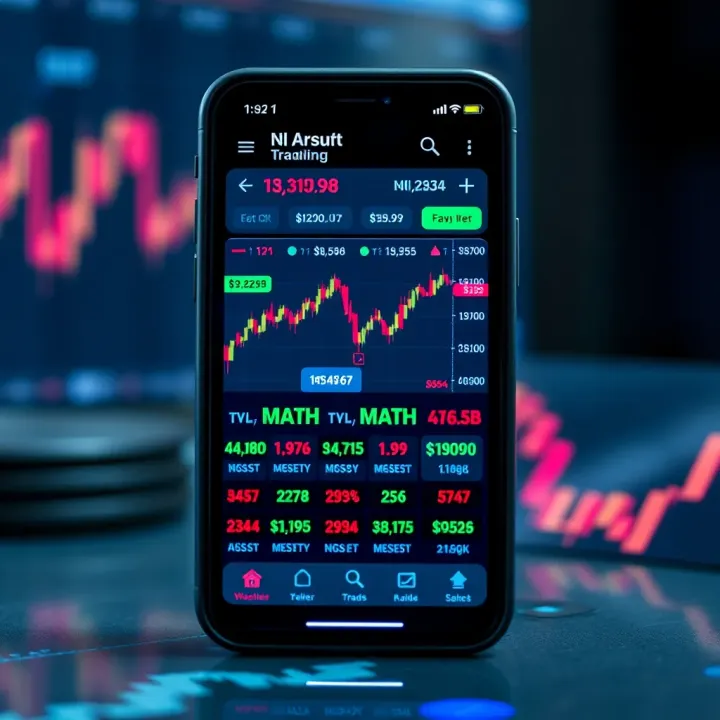
📱Explore the features & benefits of mobile trading apps for Indian investors. Learn tips & challenges to trade stocks on the go effectively and smartly.
Based on 15 reviews