

Candlestick Patterns Explained with Examples
📈 Learn key candlestick patterns with real examples to read price movements effectively. Improve your trading decisions using this practical guide designed for Indian traders.
Edited By
Emily Thompson
Candlestick chart patterns form the backbone of technical analysis in stock trading, helping you read market behaviour at a glance. These patterns show price movements through daily or intraday candlesticks, each representing open, close, high, and low prices in a specific period. For Indian traders and investors, mastering these patterns can add precision to your buy or sell decisions.
Unlike line or bar charts, candlesticks deliver richer insights by highlighting market sentiment – whether bulls or bears are in control. For example, a long green candlestick shows strong buying interest, while a long red candlestick signals selling pressure. When such candles arrange themselves in specific formations, they point to potential trend reversals or continuation.

Understanding patterns like the Doji, Hammer, Engulfing, or Morning Star equips you to predict probable price shifts. For instance, a Hammer appearing after a decline often suggests a possible bullish reversal, signalling a good entry point. On the other hand, a Bearish Engulfing pattern might warn you about an upcoming downtrend, allowing you to protect your profits or cut losses.
Patterns aren’t crystal balls but proven tools to measure market psychology. They work best combined with volume analysis and other indicators.
To make learning easier, this guide will cover key candlestick patterns with simple examples, practical tips for interpretation, and common pitfalls to avoid. Plus, we’ll point you to trusted PDF resources widely used by Indian market enthusiasts for deeper study. These documents offer ready reference sheets, detailed explanations, and chart illustrations tailor-made for hands-on practice.
Here’s what you can expect:
Precise breakdowns of major bullish and bearish candlestick patterns
How to apply pattern recognition consistently in daily trading
Access to free downloadable PDF guides for offline learning
Tips on integrating candlestick analysis with Indian market realities like volatile sessions and event-driven moves
Whether you are a novice or a seasoned analyst, sharpening your candlestick reading skills will boost confidence and fine-tune your timing in the markets. Let's get started with patterns that truly matter for your trading strategy.
Candlestick charts form the backbone of technical analysis in stock trading. They visually capture the price movement of securities within a specific time frame, providing valuable insights beyond simple price plots. Understanding their basics is essential for anyone looking to read market moods or make timely investment decisions.
Each candlestick marks four key price points: the open, close, high, and low. The open price is where trading starts for the period; the close price is where it ends. The high and low prices show the extremes reached within that period. For instance, if a Nifty stock opens at ₹1,200, touches a high of ₹1,250, dips to ₹1,180, and closes at ₹1,230, the candlestick will represent these values precisely.
Tracking these points allows traders to understand intraday volatility and decide entry or exit points with greater confidence. The spread between high and low illustrates market uncertainty or momentum.
The body of the candlestick represents the price range between the opening and closing prices. A long body usually indicates strong buying or selling pressure. Meanwhile, the shadows or wicks extend beyond the body to show the price range outside open and close, i.e., the intraday highs and lows.
For example, a long upper wick with a small body near the bottom suggests sellers pushed prices down after a rally. Recognising these shapes helps traders read investor sentiment quickly.
Colours in candlesticks indicate market direction at a glance. Traditionally in Indian trading, a green or white candle signals a closing price higher than the opening — a bullish sign. Conversely, a red or black candle means the price fell during that period, showing selling pressure.
This colour coding allows quick identification of market trends, especially during high volatility. Some Indian platforms also allow custom colour schemes, but green and red remain standard for clarity.
Unlike line charts that plot closing prices only, or bar charts that give high-low-open-close data in a concise bar form, candlestick charts blend simplicity and richness. They show the opening and closing prices as a bold body with clear upper and lower shadows, enhancing visual analysis.
Bar charts can seem confusing during fast market moves, while candlesticks present intuitive visual clues that many traders find easier to interpret.
Candlestick charts excel in short-term or intraday trading, where micro trend identification matters. The detailed display of price action in each time frame (like 5 minutes or 15 minutes) helps spot quick reversals or continuations.
For example, spotting a hammer candlestick (small body, long shadow below) during a dip in a Sensex stock could alert traders to a potential bounce, enabling timely buy decisions. This edge aids intraday traders and those managing SIP (systematic investment plans) allocations tactically.
Mastering candlestick basics can significantly improve decision-making, especially for active traders watching Indian stocks and indices closely.
By grasping these foundational elements, you can better read market signals, combining candlestick patterns with fundamental analysis or other technical indicators for more comprehensive strategies.
Candlestick patterns offer clear signals about potential price movements in the stock market, serving as a valuable tool for traders and investors alike. Recognising these patterns helps in anticipating shifts in market sentiment, which can guide timely buying or selling decisions. In the Indian context, where markets like the Sensex or Nifty show distinctive behaviours, understanding these patterns improves decision-making accuracy.
The bullish engulfing pattern occurs when a small red (bearish) candle is followed by a larger green (bullish) candle that completely covers the previous day's body. This pattern suggests a reversal from a downtrend to an uptrend, signalling buyers regaining control. For example, if an Indian stock like Reliance Industries shows this pattern near a support level, it may indicate a good entry point.
A hammer appears as a small body with a long lower wick, indicating sellers pushed the price down but buyers recovered strongly by the close. The inverted hammer is similar, but with a long upper wick signalling buying pressure struggled near the day’s high. Both patterns can hint at a potential bullish reversal, especially after a downtrend. Traders often watch these at key support zones in Indian markets, such as IT or pharma sectors, to find buying chances.

The morning star is a three-candle pattern signalling a strong bullish reversal. It starts with a long bearish candle, followed by a small-body candle (star) that gaps down, and then a long bullish candle that closes well into the first candle’s body. Spotting this pattern on charts of stocks like TCS or HDFC Bank can indicate a fresh upward trend, prompting investors to consider entering or increasing positions.
This pattern is the opposite of bullish engulfing, where a small green candle is followed by a larger red candle that fully engulfs it. It warns of a potential trend reversal from bullish to bearish. In Indian markets, this often appears before a sell-off on stocks with stretched valuations. For instance, a bearish engulfing on a stock like M&M after a sharp rise may prompt traders to book profits.
The shooting star has a small body near the day’s low and a long upper wick, indicating the price rallied but was rejected by sellers. This signals weakening bullish momentum and possible downward movement. It’s particularly useful to spot within an uptrend on charts like Infosys or Asian Paints to anticipate short-term corrections.
A three-candle pattern, the evening star reverses an uptrend into a downtrend. It consists of a large bullish candle, a small-bodied candle that gaps up (star), and a large bearish candle closing deep into the first candle’s body. Detecting an evening star in Indian bank stocks during market rallies can be a signal to tighten stops or prepare for a pullback.
Doji candles form when the open and close prices are nearly equal, showing market indecision. Variations such as the dragonfly or gravestone doji provide subtle clues about potential reversals depending on their position on the chart. Traders in India often wait for confirmation from following candles before acting on doji signals.
With small bodies and longer shadows on both ends, spinning tops indicate a balance between buyers and sellers. They often appear before a reversal or a pause in the trend, signalling uncertainty in the market. For example, a spinning top after a prolonged uptrend in the FMCG sector might warn caution before a pullback.
Harami patterns feature a large candle followed by a smaller candle contained within the first candle’s body. A bullish harami at the end of a downtrend suggests possible upward reversal, while a bearish harami during an uptrend signals potential reversal downward. Recognising harami in sectors like realty or metals can help traders anticipate shifts before strong price moves.
Understanding these patterns sharpens trading strategies by combining price action insights with market psychology. However, confirming with volume and other indicators is always advisable for better accuracy.
Candlestick patterns offer Indian traders and investors a practical way to interpret market sentiment quickly. When used carefully, these patterns help spot potential reversals or continuations in stock price movements, making them a valuable tool in the bustling Indian equity markets. Their effectiveness increases when applied specifically to Indian indices and stocks, reflecting local market behaviour and trends.
The Sensex and Nifty 50 are the benchmarks most Indian traders watch closely. Applying candlestick patterns on these indices can give early signals about market turns or trend strength. For example, a bullish engulfing pattern on the Nifty after a series of declines might suggest a short-term recovery, prompting traders to consider entry points. Similarly, a shooting star pattern on the Sensex could warn of a potential pullback. These patterns, combined with awareness of current economic events—like RBI policy announcements or corporate earnings—offer actionable insights.
Different sectors tend to exhibit unique candlestick behaviours, influenced by factors such as government policies, global demand, or monsoon conditions. For instance, the IT sector stocks often show momentum-driven patterns, especially after quarterly results, whereas FMCG companies may present more stable patterns due to consistent demand. Understanding these sectoral nuances can help traders avoid one-size-fits-all interpretations and improve timing decisions when trading stocks within industries like banking, pharma, or automotive.
Volume plays a crucial role in validating candlestick patterns. A pattern gains credibility if accompanied by increased trading volume. For example, a hammer candlestick rising on heavy volume signals strong buying interest in a stock like Reliance Industries. Conversely, a similar pattern on thin volume could be misleading. Therefore, analysing volume data alongside patterns can help confirm genuine market moves versus random price fluctuations.
Combining candlestick patterns with moving averages (MA) creates a more rounded technical strategy. For instance, spotting a bullish engulfing pattern near the 50-day MA can suggest strong support for the stock price, encouraging long positions. In Indian markets, shorter moving averages like 20-day or 50-day often act as key dynamic support or resistance levels. Aligning signals from candlesticks and moving averages helps reduce false entries, particularly useful in volatile stocks or uncertain market phases.
The RSI helps assess if a stock is overbought or oversold, refining candlestick analysis. A doji or spinning top pattern in an oversold stock (RSI below 30) can hint at a potential bounce-back, making it a good entry point. Conversely, bearish patterns with an RSI above 70 may suggest a pending correction. Using RSI in conjunction with candlestick patterns helps traders in India avoid acting on weak signals and improve timing for buying or selling decisions.
Applying candlestick patterns with a clear view of Indian market specifics and supporting indicators like volume, moving averages, and RSI considerably sharpens trading decisions and risk management.
This approach brings together price action and market momentum, tailored to India’s diverse and dynamic stock environment.
PDF resources offer a focused and reliable way to deepen your understanding of candlestick chart patterns. For investors and traders, especially in India’s diverse market, these documents provide structured explanations, pattern examples, and practical insights that are easy to revisit anywhere offline. Using such resources complements hands-on chart analysis and helps build a solid foundation, preventing guesswork and hasty decisions.
Several respected Indian financial websites regularly publish free PDF guides on stock market topics, including candlestick patterns. Platforms like Moneycontrol, Equitymaster, and Economic Times Market provide well-curated content authored by local experts, often tailored to Indian market instances such as Sensex or Nifty stocks. These PDFs simplify complex concepts and often link patterns observed in prominent Indian companies, which makes learning practical and relatable.
Since these sites update their educational content following market developments, they remain current with any new pattern interpretations or trading tactics. Additionally, their downloadable PDFs allow users to study at their own pace or refer back during trading hours without internet dependency.
The Securities and Exchange Board of India (SEBI) and the National Stock Exchange (NSE) offer official educational PDFs designed for investors entering technical analysis. These official resources carry authority and ensure compliance with regulatory norms, making them trustworthy.
NSE’s ‘Investor Awareness’ section includes detailed modules on candlestick charts, complete with real-world case studies from Indian indices and stocks. Similarly, SEBI’s investor education programmes produce PDFs explaining various technical analysis tools, including candlestick patterns. Using these materials reduces reliance on ambiguous online content and provides regulatory-approved insights.
Approach PDF resources with a clear plan; do not try to swallow everything at once. Start by skimming to identify key sections like pattern definitions, examples, and trading applications. Break your study into manageable chunks over several sessions.
For instance, dedicate one day to bullish patterns and the next to bearish patterns, followed by a session on combining these with indicators. This phased approach reinforces learning and helps internalise the details, essential for applying knowledge during live market conditions.
Make active notes and highlight important parts within the PDFs to aid quick recall. Digital readers and PDF apps often have annotation tools allowing you to mark patterns or jot down your interpretations beside examples. Such personalised notes serve as quick reminders when analysing live charts later.
For example, you might underline key candles that signal reversal and add a note on what volume trends confirmed the pattern’s reliability. These small steps improve retention and make the study process interactive rather than passive.
Reading about patterns is not enough; applying them on actual charts makes a big difference. Use the PDF diagrams as references while practising on platforms like Zerodha Kite, Upstox, or NSE’s web chart tools. Observe how patterns form on popular Indian stocks like Reliance Industries or HDFC Bank and confirm with volume or RSI indicators.
Try to match what you read in PDFs with live or historical price movements. This hands-on testing will build confidence in recognising authentic signals versus misleading patterns, helping refine your trading and investing strategies.
Consistent use of well-crafted PDF resources, combined with regular chart practice, makes mastering candlestick patterns more systematic and effective, especially in the varied conditions of Indian markets.
Candlestick patterns provide valuable clues on market sentiment, but traders often fall into traps that can cost them dearly. Recognising common mistakes helps you use these patterns more effectively, avoiding false signals and costly errors.
One of the biggest mistakes is spotting a pattern without considering the overall market trend. For example, a hammer candlestick signals potential reversal, but if it appears during a strong downtrend without any confirming factors, betting on a reversal is risky. Bullish or bearish patterns gain more reliability when aligned with the broader trend.
Ignoring this context is like reading a single sentence out of a book — you miss the full story. Indian markets, such as Sensex or Nifty, often show strong sectoral trends, so it is wise to analyse those alongside candlestick patterns to avoid acting on weak signals.
Volume acts as a referee in validating a candlestick pattern's signal. A bullish engulfing pattern, for example, holds more weight if the volume spikes compared to the previous sessions. Without volume confirmation, the pattern might just be a random fluctuation.
In practice, ignoring volume is like trying to judge a cricket match by runs alone, ignoring how well the bowlers performed. Similarly, filtering signals through indicators like moving averages or the Relative Strength Index (RSI) enhances your decision-making accuracy in the Indian stock market.
Candlestick patterns such as the doji and spinning top look alike but convey different meanings. A doji indicates indecision with near-equal open and close prices, while a spinning top has a small body but longer shadows, suggesting uncertainty but with more price movement.
Confusing these can lead to wrong trading decisions. For instance, seeing a spinning top as a doji might cause you to underestimate market uncertainty, leading to premature buys or sells. Such mistakes happen often, especially among fresh traders.
Relying solely on candlestick patterns without combining them with other analyses can backfire. Patterns may appear frequently but don't always signal strong moves; the market may ignore them.
To avoid this, pair candlestick readings with technical indicators, trend lines, or fundamental insights. For example, a morning star pattern followed by positive quarterly results from a company listed on NSE adds conviction. Ignoring these layers reduces your trade quality and increases risk.
Successful trading with candlestick charts depends on context, confirmation, and clarity. Avoid these mistakes to enhance your edge in Indian markets.
Always check the market trend before acting on patterns.
Look for volume spikes to confirm signals.
Learn to distinguish similar-looking patterns carefully.
Use candlestick patterns as one tool in your broader analysis toolkit.
By steering clear of these common errors, you increase your chances of making sensible trades and preserving capital in volatile conditions.
📈 Learn key candlestick patterns with real examples to read price movements effectively. Improve your trading decisions using this practical guide designed for Indian traders.

📈 Learn how to read market candlestick patterns for better trading decisions in the Indian financial markets. Get clear insights and practical tips for success!
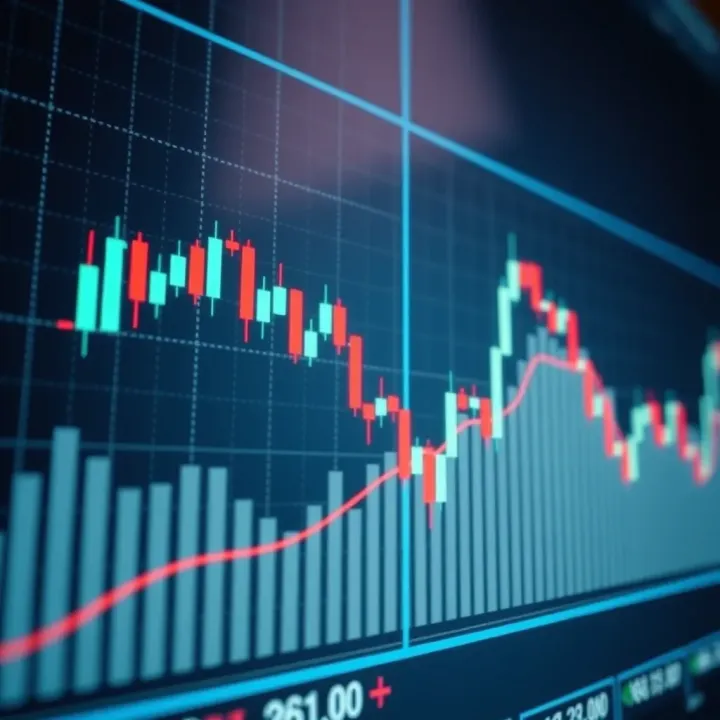
📈 Understand key candlestick patterns on stock charts for smarter trading in Indian markets. Learn to interpret volumes and shape strategic decisions effectively.

📈 Learn to read candle chart patterns in stock trading, spot bullish and bearish signals, and combine them with other tools for smarter market decisions.
Based on 15 reviews