

Understanding Binary Numbers and Their Use
🔢 Explore how binary numbers work in computing, learn easy conversion methods, binary arithmetic, and see how it powers everyday tech gadgets! 📱💻
Edited By
Charlotte Reed
A 4-bit binary adder is a foundational circuit in digital electronics, widely used for adding two 4-bit binary numbers. This circuit forms the backbone of arithmetic operations in computing devices including calculators and microprocessors. At the core of this system are multiple full adders wired together to manage bitwise addition and carry propagation.
Understanding the 4-bit binary adder begins with recognising its main components. Each full adder takes two input bits along with a carry-in bit and produces a sum bit plus a carry-out bit. By connecting four full adders in a sequence, the circuit can add binary numbers up to 15 (1111 in binary).
Here's how it works practically:
The first full adder handles the least significant bits and receives an initial carry-in of zero.
Each subsequent full adder adds corresponding bits and the carry-out from the previous adder.
The final carry-out, after the fourth full adder, signals an overflow if it is set, useful in multi-bit arithmetic checks.
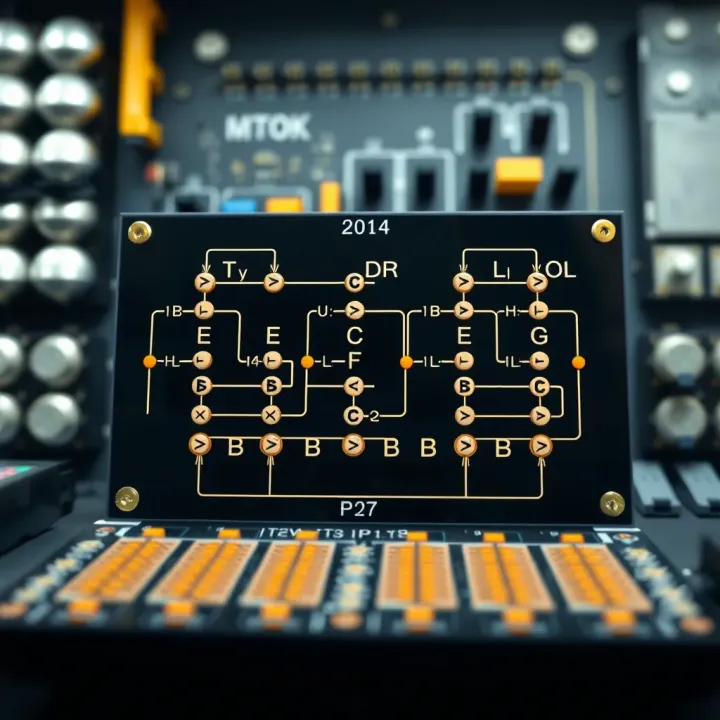
The circuit diagram typically includes four full adder blocks, each connected in cascade form. Inputs A0 to A3 and B0 to B3 represent bits of the two numbers being added. Carry lines link the full adders, ensuring correct carry transfer.
This design neatly illustrates the principle of binary addition and highlights how complexity scales with bit-size. For example, extending to an 8-bit adder simply involves chaining eight full adders similarly.
Practically, these adders find use in embedded systems in India, such as in digital meters, calculators, and even simple microcontrollers where arithmetic logic units (ALUs) require fast, reliable addition.
In summary, the 4-bit binary adder circuit combines individual full adders to handle multi-bit binary additions, making it an essential building block in digital logic design. Its clear structure and function make it a must-know topic for electronics students and professionals alike.
Understanding the basics of binary addition and the role of adders forms the foundation for grasping how digital systems perform arithmetic operations, crucial for applications ranging from everyday calculators to complex financial modelling software. Binary addition works on the same principle as decimal addition but uses only two digits: 0 and 1. This simplicity allows electronic circuits to handle arithmetic efficiently, making full and half adders essential components in digital computers.
Binary numbers represent values using just two symbols, 0 and 1. This system aligns with the on/off states of electronic circuits, making it ideal for computer logic. For instance, the decimal number 5 is represented in binary as 101. This form lets digital machines easily process and store values.
Binary addition follows straightforward rules:
0 + 0 = 0
0 + 1 = 1
1 + 0 = 1
1 + 1 = 10 (which means 0 with a carry-over of 1 to the next bit)
This carry mechanism is vital as it ensures accuracy when adding multi-bit numbers, just like in decimal addition where adding 9 + 1 requires carrying over to the next place value.
Let's consider some binary sums:
Adding 0101 (5 in decimal) and 0011 (3) results in 1000 (8).
When adding 1110 (14) and 0001 (1), the sum is 1111 (15).
Such examples show how binary arithmetic is the backbone of digital calculations in devices you use daily.
A half adder is a simple circuit that adds two single binary digits (bits), producing a sum and a carry output. It comprises basic logic gates: XOR for sum and AND for carry. However, it cannot handle carry from a previous addition, so its use is limited to the least significant bit of a multi-bit addition.
The limitation in handling incoming carry means half adders cannot be chained directly for adding larger binary numbers. For example, if you want to add 4-bit numbers, the carry from the previous bit addition must be considered, which half adders alone cannot manage.
This is where full adders come in. A full adder circuit adds three bits: two significant bits plus an incoming carry bit. It outputs a sum bit and a carry-out bit. Full adders allow chaining multiple units to construct adders capable of handling larger numbers, like 4-bit or 8-bit additions used in processors.
Full adders are essential for precise binary addition in multi-bit digital circuits, enabling the smooth flow of carry bits across bits.
Overall, mastering these basic concepts makes it easier to understand complex adder circuits, highlighting their practical role in electronics and computing applications familiar to students, analysts, and professionals alike.
Understanding the anatomy of a 4-bit binary adder is essential for grasping how digital systems perform multi-bit addition. This knowledge helps students and professionals alike to decode complex arithmetic operations in computing devices. A 4-bit adder combines smaller units called full adders to handle four bits from two numbers at a time, something typically seen in calculators or microcontrollers.
How carry is propagated: Each full adder in the circuit handles one bit from both input numbers plus a carry from the previous stage. For example, the lowest bit adder sums the least significant bits (LSBs) of inputs A and B, producing a sum and a carry output. This carry is then passed to the next full adder handling the next significant bit. This propagation of carry bits is crucial because it ensures accurate addition across all bits. Without proper carry propagation, the final sum would be incorrect, especially when adding large numbers.

In practical terms, the delay caused by carry propagation is an important factor when designing circuits for speed. Longer chains of full adders, like in 8-bit or 16-bit adders, face increased delay, which electronic engineers must consider.
Interconnection between adder stages: The stages of full adders are connected such that the carry output of one stage feeds directly into the carry input of the next. This series connection forms the backbone of the 4-bit adder. Inputs A and B corresponding to each bit position are fed simultaneously to each full adder.
This interconnection simplifies the circuit’s layout but also introduces a ripple effect—each carry must propagate through the stages in sequence. Recognising this helps when exploring faster adder designs like carry-lookahead adders, which tackle this delay by anticipating carry generation.
Input bits A and B: The 4-bit adder takes two binary numbers, each made of four bits labelled A3 to A0 and B3 to B0, where the suffix indicates bit position from most to least significant. These bits are the primary inputs, and the adder processes them pairwise.
This approach allows simultaneous addition of corresponding bits, making the circuit efficient for handling bytes. It's important for applications needing straightforward binary arithmetic, such as digital watches and embedded systems.
Carry input and output: The carry input to the first full adder (usually zero) allows the circuit to add with an external carry, supporting chained addition operations. Each full adder produces a carry output passed to the next adder’s input, as already mentioned.
The final carry output from the last adder shows if an overflow occurs beyond 4 bits. This output is vital when the sum exceeds the adder’s bit width, signalling special handling might be needed, such as reserving an extra bit or triggering an overflow flag in processors.
Sum output for four bits: Each full adder outputs one sum bit, resulting in a final 4-bit sum from the combined adder circuit. This sum represents the addition result of input bits plus any carry input.
The four sum bits together form a binary number ranging from 0 to 15 (in decimal). This output is the main product of the adder and is used downstream in arithmetic or logic operations, data storage, or display modules.
In brief, understanding inputs, outputs, and interconnections in the 4-bit adder helps simplify complex binary arithmetic into manageable hardware blocks. This forms the basis for more advanced digital arithmetic designs encountered in real-world technology.
A close look at the 4-bit adder circuit diagram reveals how individual components come together to perform multi-bit binary addition. This detailed examination is vital for understanding how the circuit manages carries, sums, and interconnections in a concise layout. Clarity on these aspects helps especially those building or troubleshooting this digital circuit, common in basic computing or embedded systems.
The 4-bit adder primarily utilises XOR, AND, and OR gates. XOR gates handle the sum calculation by performing bitwise addition without considering carry initially. AND gates are pivotal in detecting carry generation between bit pairs, while OR gates combine multiple carry signals to decide if the next higher bit receives a carry input. For example, in ICs like 7483, these gates are integrated efficiently to manage 4-bit addition seamlessly.
Understanding the role of each logic gate helps in grasping why certain configurations appear repeatedly in the circuit. For instance, without XOR gates, sum outputs would lose accuracy, and without AND-OR combinations, proper carry propagation fails. This insight aids in troubleshooting faulty outputs caused by damaged gates.
Wiring plays a critical role in establishing correct data flow. The circuit diagram shows successive full adders connected so that each carry output feeds the next adder’s carry input. Input pins A and B represent corresponding bits of the numbers being added, connected vertically across four stages.
Proper wiring ensures that signals propagate correctly. For example, if a carry signal does not move properly due to a loose or incorrect wire, the final sum will be incorrect, typically causing errors starting from the least significant bit. Hence, clear wiring maps help builders avoid common pitfalls during assembly.
The addition starts at the least significant bit (LSB), where inputs A0 and B0 are fed into the first full adder along with an initial carry input, generally zero. The adder produces a sum output and a carry out based on these inputs. Handling the LSB correctly is crucial; an error here cascades through the entire addition process.
Practically, ensuring the initial carry input is grounded can prevent spurious outputs at the LSB. This step sets the tone for accurate overall addition.
Once the LSB handes its sum and carry, the carry output feeds the next stage’s carry input. This chaining continues through all four adders, enabling carry propagation across all bits. Each stage performs addition considering its respective input bits plus the carry from the previous stage.
This propagation mechanism explains why delay or timing issues in the circuit can affect performance. In faster digital systems, designers might handle this using carry lookahead techniques, but in a basic 4-bit adder, simple ripple carry remains common and easier to implement.
After the last full adder processes its inputs and carry in, it outputs the most significant sum bit and the final carry out. The final carry output indicates overflow beyond the 4-bit limit, often signalling the need for a larger bit-width adder.
Identifying this overflow is important when designing digital systems like calculators or processors, to trigger correct handling of out-of-range results.
Grasping the detailed layout and operation of the 4-bit adder circuit enables practical understanding and confident use of this fundamental digital building block, especially in Indian academic and hobbyist environments where hands-on experience matters most.
When building a 4-bit binary adder, practical aspects such as selecting the right components and ensuring proper functioning are just as important as understanding the theory. The design’s performance depends heavily on the choice of integrated circuits (ICs), power supply stability, and careful circuit assembly to avoid common pitfalls. These considerations help avoid unnecessary troubleshooting and improve reliability.
Choosing the appropriate full adder IC is fundamental. Popular ICs like the 7483 4-bit binary full adder or the 74LS83 TTL series are commonly used in educational projects and practical circuits. These ICs integrate all necessary logic gates and offer reliable performance at standard TTL voltage levels. For example, the 74LS83 is widely available and supports ripple carry addition with low propagation delay, making it suitable for small-scale arithmetic operations.
Besides IC choice, components like resistors, capacitors for power smoothing, and stable wiring also impact performance. Using ICs from reputable manufacturers ensures consistent quality and ease of maintenance. Furthermore, opting for socket pins rather than direct soldering can simplify component replacement and testing.
Power supply and signal integrity also play key roles. A stable 5 V power supply is typical for TTL ICs, but voltage fluctuations can cause logic errors or inconsistent outputs. Noise filtering capacitors (like 0.1 µF ceramic capacitors near the IC power pins) help eliminate voltage spikes. Signal lines must be properly routed and shielded if needed, especially in breadboard setups prone to noise and loose connections.
Faulty connections are the most frequent issue when assembling 4-bit adders. Misplaced or loose jumper wires can cause outputs to behave erratically. It’s helpful to double-check each connection against the circuit diagram, using a multimeter for continuity tests. Labeling wires can reduce confusion during assembly.
Timing problems arise when carry signals do not propagate correctly due to propagation delay differences between gates. This can lead to incorrect sums or carry output glitches. To handle timing issues, adding small delay buffers or using faster IC variants is effective. Additionally, thorough testing under different input combinations ensures that timing bugs are caught early.
Testing the circuit systematically prevents hidden errors from going unnoticed. Start by checking the half adder section with simple inputs to verify sum and carry outputs. Then test the full adder logic for intermediate bits before combining all four stages. Using LEDs or logic analyzers helps visualise outputs directly. Always document the results to track any patterns of faults for quicker troubleshooting later.
Ensuring strong fundamentals in component choice and construction greatly reduces errors, making your 4-bit binary adder a robust and reliable circuit suitable for both study and practical use.
4-bit adders form the backbone of many simple digital systems and pave the way for more complex arithmetic units. Understanding their applications helps clarify their practical importance, especially as foundational blocks in computational hardware. Beyond basic use, extending their design to handle more bits is key in expanding computing capabilities.
The 4-bit adder is essential in early-stage digital systems like basic computers and electronic calculators. These devices convert input numbers into binary and rely on adders to carry out arithmetic operations quickly. For instance, some basic calculators use a 4-bit adder to add numbers up to 15 (the maximum number representable in 4 bits) before moving on to more complex processes.
This simplicity allows efficient hardware design with minimal components, suitable for embedded systems and low-cost electronics. Even modern CPUs use these fundamental concepts at the microarchitecture level, combining many bit-adders to process larger numbers.
In digital signal processing (DSP) and data manipulation circuits, 4-bit adders help perform essential arithmetic tasks like addition and subtraction. They are often integrated into arithmetic logic units (ALUs) where speed and accuracy matter. For example, in digital filters and controllers, these adders assist in accumulating sums or differences of input data streams.
Their modular nature simplifies the design and testing of these circuits, improving reliability. This makes 4-bit adders a go-to choice when designing compact, reliable data processing modules for tasks such as image processing or basic cryptographic operations.
When numbers exceed 4 bits, multiple 4-bit adders can be connected, or cascaded, to handle wider data paths. This technique divides a large binary addition problem into smaller chunks, each handled by a 4-bit adder unit. For example, an 8-bit adder can be built by linking two 4-bit adders, with the carry output from the lower 4-bit adder feeding into the carry input of the higher one.
This approach reduces design complexity and reuses existing, well-tested components for different bit widths. Indian engineers and students often see this design method in microcontroller arithmetic operations where bit-width flexibility matters.
Ripple carry adders represent the simplest form of cascading 4-bit adders. Here, the carry “ripples” through each 4-bit block sequentially, from the least significant bit to the most significant bit. While easy to implement, this method introduces delay because each adder must wait for the carry from the previous stage before producing its output.
Despite this delay, ripple carry adders work well in low-speed digital circuits and educational projects. Understanding this principle is critical for grasping how more advanced adder designs improve speed by optimising carry propagation, especially in high-performance Indian processors and devices.
Recognising the practical applications of 4-bit adders and their extensions forms a vital part of learning digital design, bridging theory and real-world circuits used widely across Indian industry and academia.
🔢 Explore how binary numbers work in computing, learn easy conversion methods, binary arithmetic, and see how it powers everyday tech gadgets! 📱💻

🔢 Understand octal to binary conversion with clear examples, solve common confusions, and get tips for accurate number system handling in computing and electronics.

Explore why saying 'No to Binary' matters in gender, tech & society 🌈. Understand non-binary identities, challenges, & growing inclusivity in India.

🔢 Learn binary to decimal conversion with clear steps! Understand number systems and binary's role in computing. Perfect for students and tech enthusiasts.
Based on 10 reviews