
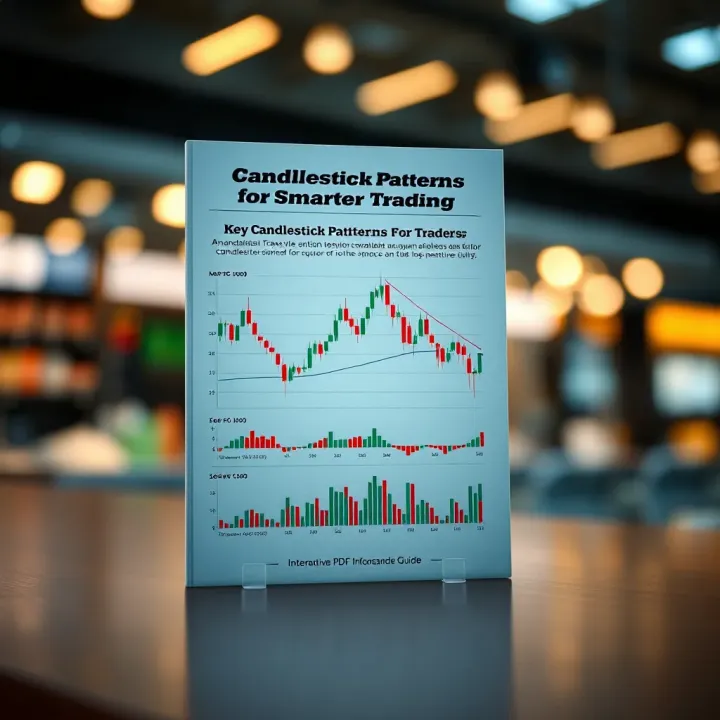
Key Candlestick Patterns for Smarter Trading
📊 Explore the most effective candlestick patterns for trading, understand market trends, and use PDF guides to boost your trading skills confidently.
Edited By
Benjamin Clarke
Spotting momentum in the stock market can feel like trying to catch a speeding train. But that’s exactly what momentum candlestick patterns help you do—catch the strong price moves before they zoom past. If you’re a trader, investor, or analyst looking to sharpen your edge, understanding these patterns is like having a map to where the action’s at.
Momentum isn’t just about fast moves; it reveals the market’s conviction behind those moves. Candlestick charts, with their simple yet powerful visual formats, shine a light on these shifts. This article breaks down the basics of candlestick charts, dives into key momentum patterns that signal strong buying or selling pressure, and shows how to use this knowledge practically.

You'll find clear explanations, tips on spotting reliable patterns, and even handy downloadable PDFs to keep as your trading sidekick. Whether you’re swinging trades over days or hunting quick profits, recognizing momentum candlesticks improves your timing and confidence.
Remember, the market has a rhythm. Once you learn to read it through momentum patterns, you can move along with the beat rather than against it.
In the sections ahead, we’ll cover:
What makes a candlestick chart tick and why it’s so useful
The most common and trustworthy momentum patterns
How these patterns translate to real-world trading decisions
Practical do’s and don’ts to avoid costly mistakes
Resources to dive deeper and keep your skills sharp
Grasping these candlestick insights is not just theory—it can be a practical step to spotting strong moves early, making smarter trades, and understanding market sentiment better. Let's get into it.
Candlestick charts serve as the backbone for many traders looking to gauge market moves quickly. They’re not just pretty visuals—they bring real, useful insight that you won’t get by just glancing at a line chart. For anyone diving into momentum candlestick patterns, knowing the basics of candlesticks is non-negotiable.
Take, for instance, a trader watching Infosys shares on the NSE; with candlesticks, they can instantly see daily price action, which tells them more than just the closing price. Understanding these charts helps you read the story behind the numbers, like spotting when buyers suddenly rush in or when sellers take over, often before news hits the market.
Candlestick charts trace back centuries, originally developed in Japan by rice traders. They began as a way to track prices visually and quickly, which they still do best today. The value lies in both history and functionality—knowing how these came up helps traders appreciate why they still pack a punch in modern finance.
For example, a Japanese trader in the 18th century would look at these charts daily to know when to buy or sell rice. Over time, this technique spread globally because it works across different markets—including stocks, commodities, and forex. This historical edge means the charts have been tested through many market cycles, reassuring traders that these patterns aren’t just a fad.
At its core, each candlestick includes four key prices: open, high, low, and close. Visualize it as a box with wicks or shadows extending above and below. The box color helps traders quickly know if the price went up (typically green or white) or down (red or black) in that period. For instance, a long green body might suggest strong buying momentum in Tata Motors stock during a single session.
Reading these visuals means looking beyond just color. The length of the shadows, the size of the body, and where the open and close sit can hint at market uncertainty, strength, or weakness. A hammer candlestick after a downtrend might signal a possible reversal, something traders on the Bombay Stock Exchange could spot early to act on.
Compared to other chart types, candlesticks pack a punch because they show more data in less space, which is crucial when you need to make quick decisions.
Unlike line charts that just connect closing prices, candlesticks tell you about the whole trading period. This means you see intraday volatility and not just the end result, allowing traders to catch subtle shifts in momentum. For example, during volatile sessions in Reliance Industries shares, candlesticks reveal the tussle between bulls and bears that line charts simply smooth over.
Each candlestick hints at the mood of the market—whether traders are confident, scared, or chasing prices. A series of bullish candlesticks with little lower shadows can tell you investors are charging ahead with conviction. Conversely, long upper shadows might mean sellers kept pushing back, a sign of hesitation.
Candlesticks are often a go-to for setting entry and exit points. Traders combine these visuals with other tools, like volume or moving averages, to create robust strategies. For instance, spotting a bullish engulfing pattern near a support level on the NSE could be your cue to jump in, with a stop loss set just below the low of that pattern.
In short, candlestick charts do more than just illustrate price data—they provide a visual shorthand that taps directly into market psychology. Understanding this foundation makes spotting momentum patterns not only easier but also more reliable in real-world trading.
Momentum plays a vital role in trading because it captures the force behind price moves—not just the direction, but how fast and strong the price is moving. Understanding momentum helps traders spot moments when the market is gathering steam, which can lead to big moves either up or down. For example, if a stock like Reliance Industries sees a quick surge in price with higher-than-average volume, that momentum signals there’s genuine interest driving prices higher. Recognizing this early can help traders get in ahead of a potential rally.
Grasping momentum also aids in timing entries and exits better. Instead of guessing whether a price will rise or fall, knowing momentum offers a sense of strength behind moves, helping reduce mistakes. Overall, understanding momentum adds a valuable layer of insight on top of standard trend analysis, letting traders make decisions with more confidence and clarity.
Momentum measures how quickly and powerfully a price changes over time. It's not just about whether the price goes up or down, but how sharply it does so. For instance, a stock that moves 5% in a day with heavy volume has stronger momentum than one inching up 1% in the same period. Traders often use momentum indicators like RSI (Relative Strength Index) or MACD (Moving Average Convergence Divergence) to quantify this.
The practical takeaway? Strong momentum often hints at continued price movement in the same direction. If a stock gains 10% in two days with rising volume, chances are the buyers are in command. However, weak momentum signals caution—even if the trend is up, slow or choppy price changes might mean the move lacks conviction, increasing the risk of reversal.
While momentum and trend sound related, they're not the same thing. A trend is the general direction prices move over a period: upward, downward, or sideways. Momentum, however, measures the intensity of that movement. You can have a strong upward trend with increasing momentum, which suggests the trend is likely to continue. Conversely, if momentum fades while the trend persists, that might indicate the trend is weakening.
Think of a trend as a car moving down the road, and momentum as how hard it’s accelerating. Sometimes the car cruises steadily (trend without momentum), sometimes it speeds up sharply (trend with strong momentum), and other times it slows down suddenly (fading momentum). Identifying these moments helps traders anticipate whether a trend will keep rolling or stall.
Momentum patterns act like flashing signs for potential breakouts—when prices bust out from a trading range or key level. For example, if the Nifty index suddenly forms a strong bullish candlestick with long body and little wick, accompanied by high volume, it’s a sign momentum is pushing prices beyond resistance. Spotting this early lets traders jump in before wider market participants catch on, often giving a better price.
Such breakouts with clear momentum confirm there’s force behind the move, reducing the chance of false breakouts which quickly fizzle out. This can make or break trading success, especially in volatile markets.
Momentum patterns also provide clues whether an existing trend will keep trucking along or lose steam. For example, a series of “three white soldiers” candlesticks suggests sustained bullish momentum, hinting that upward momentum will probably carry prices further.
This helps traders stay invested in winning trades longer without prematurely selling. On the flip side, spotting weakening momentum, like doji candles or shooting stars after a rally, can warn that it's time to tighten stops or lock in profits.
One common headache for traders is false signals—price moves that look promising but quickly reverse. Momentum patterns act as filters by confirming genuine strength behind moves. If a breakout candle happens on low volume or weak momentum, it’s wise to be skeptical.
Momentum tools therefore help avoid jumping the gun on ‘fake’ breakouts or reversals, saving traders from whipsaw losses. By demanding confirmation of speed and strength, momentum patterns provide an extra layer of validation before making a trade.
Understanding momentum isn’t about predicting the future with certainty, but about reading the market’s current energy to trade smarter. Recognize when the market is genuinely moving and when it’s just noise, and you’ll navigate the ups and downs with more confidence and fewer surprises.
In short, momentum is a practical measure of the pulse of price action. It helps spot strong moves early, confirm trends, and decline costly false alarms. For traders focusing on candlestick patterns, momentum insights shine a flashlight on the true strength behind the candles, improving decision-making significantly.
Understanding key momentum candlestick patterns is crucial because they offer clear visual cues about the strength and direction of price moves. These patterns are not just shapes on a chart—they provide real-time hints about who’s winning in the market, buyers or sellers. For traders, spotting these patterns early can be the difference between jumping on a trend or chasing after it too late.
One practical advantage is how these patterns simplify complex market data into understandable chunks. Instead of guessing or relying on multiple indicators, momentum candlestick patterns give a quick snapshot of potential price action. For example, a long bullish candlestick with little or no wick signals that buyers had full control, pushing prices straight up from open to close without much resistance.
Bear in mind, these patterns are most useful when read in context—alone, they might not tell the whole story. Integrating volume data, trend direction, and nearby support or resistance levels rounds out the picture. Remember, no pattern guarantees a move, but knowing them well boosts your odds and sharpens your timing.
The Bullish Marubozu is like a bull’s loud roar in the market. It’s a candlestick with a long body and almost no shadows on either side, showing that buyers dominated the whole trading session from start to end. This pattern means strong buying interest and momentum, especially if it appears after a downtrend or consolidation phase.
Traders watch Bullish Marubozu closely because it signals potential continuation or reversal to the upside. For instance, if you see this pattern on Reliance Industries’ stock chart after a minor dip, it suggests buyers are stepping in hard, and the price might surge further.
The practical tip here: a Bullish Marubozu gains credibility when confirmed by higher-than-average volume. It’s a solid clue to consider entering a long position or adding to an existing one, with a tight stop loss below the candlestick’s low.
This pattern consists of three consecutive long-bodied bullish candles, each closing higher than the last. Imagine three soldiers marching upward steadily, showing sustained buying strength. It’s a textbook sign of strong upward momentum, often marking the beginning of an uptrend or a strong rally within one.
To spot the Three White Soldiers, look for candles that open within the previous candle’s real body and close near their highs without long upper wicks. That means buyers maintained control all along. For example, during a bullish phase in HDFC Bank shares, the presence of Three White Soldiers can reinforce the confidence to stay invested or enter the trade.
However, avoid chasing right away—in stead, wait for a slight pullback or volume confirmation to reduce risk.
These two are subtle but powerful bullish reversal patterns usually found at market bottoms. A Hammer has a small real body near the top of the candle and a long lower shadow, suggesting that bears pushed prices down sharply but buyers pulled them right back up before the close.
The Inverted Hammer flips this idea: it has a small body near the bottom with a long upper shadow, signaling buyers tried to gain ground but weren’t able to close strongly, though still showing buying pressure.
In practical trading terms, seeing a Hammer or Inverted Hammer after a downtrend on stocks like Infosys hints at a possible shift in momentum. Ideally, confirmation comes with the next candle closing higher, supporting a buy entry.
The Bearish Marubozu shows the opposite of its bullish cousin. It’s a long red candle with no or minimal wicks, meaning sellers controlled price action fully throughout the session. This pattern signals strong bearish momentum and can indicate a continuation of a downtrend or a sharp reversal after a rise.

If you spot a Bearish Marubozu pattern on stocks like Tata Motors, it’s a red flag to tread carefully or consider exiting long positions. Volume again matters—a high selling volume closer confirms conviction.
Think of Three Black Crows as bear territory’s version of the Three White Soldiers—three consecutive long bearish candles, each closing lower than the last. It shows sustained selling pressure and a possible shift in trend or continuation of a down move.
This pattern warns traders that the bears are in full control. For example, during market corrections in ITC shares, spotting Three Black Crows signals further weakness. Traders might tighten stops or look for short-selling opportunities.
Still, watch out for oversold conditions or strong support nearby, which could blunt the bearish momentum.
This pattern looks like a star shooting high then falling back down—an upper shadow at least twice the size of the body with a small real body near the candle’s low. It implies buyers pushed prices up during the session but sellers hit back hard before close, weakening the upward momentum.
The Shooting Star is important as a warning signal after a price rally, often seen near resistance levels. For instance, when a shooting star appears in the Tata Steel chart after a rally, it can be a hint that bulls are tiring, and a pullback or reversal might be around the corner.
Actionable advice: wait for the next bar to confirm the pattern by closing lower before taking bearish positions.
Recognizing these key momentum candlestick patterns in real trading scenarios enhances your market readability. They aren’t foolproof but serve as valuable tools in your decision-making toolkit when combined with other analyses.
Mastering these patterns helps you react swiftly and with confidence, rather than guessing or reacting emotionally to price swings.
Understanding how to spot momentum patterns on charts is vital for traders aiming to capitalize on rapid price movements. These patterns offer a visual snapshot of buying or selling pressure building up and potentially indicating strong future moves. Spotting them early allows investors to enter or exit positions more effectively, limiting risks and maximizing profits.
Selecting the right timeframe is a game-changer when identifying momentum candlestick patterns. Shorter timeframes like 5 or 15 minutes are great for day traders hunting for quick momentum bursts, while daily or weekly charts suit swing traders looking for sustained moves. For example, a bullish marubozu on a 15-minute chart might indicate an immediate buying spike, but the same pattern on a daily chart suggests longer-term strength.
It's crucial to match the timeframe with your trading style — chasing a momentum setup visible only on a weekly chart won’t help if you’re aiming for fast scalping profits. Also, reviewing multiple timeframes helps confirm whether the momentum pattern is part of a bigger trend or just a minor blip.
Adding indicators can sharpen your momentum pattern identification significantly. Volume is a must-have, as rising volume alongside a momentum candle confirms genuine interest behind the move. Momentum oscillators like the Relative Strength Index (RSI) or the Moving Average Convergence Divergence (MACD) can also help by showing if the price action is overbought or oversold.
For instance, spotting a three white soldiers pattern with RSI climbing above 50 and volume spiking adds confidence that the momentum is real and not just noise. Setting alerts on these indicators can save you from staring at charts all day yet never missing a critical setup.
The strength of a momentum candle is often visible in its body size and wick length. A strong bullish momentum candle will have a large real body with little to no upper wick, signaling buyers dominated the session without much selling pressure. Conversely, long wicks can show hesitation or rejection of price levels.
For example, a hammer candlestick at a support level with a long lower wick suggests buyers stepped in strongly after a sell-off, which could signal an upcoming reversal or momentum surge.
Volume is the fuel behind momentum. A candle showing a bullish or bearish pattern with accompanying high volume is far more reliable than one on thin volume. Volume spikes prove market participation and help weed out false moves caused by a handful of trades.
Consider a shooting star pattern forming atop an uptrend. If volume surges, it might signal a real momentum shift. But if volume is low, the pattern could just be a fleeting market hesitation.
No momentum pattern exists in a vacuum. Its significance skyrockets when viewed against the bigger market context. For example, a bullish marubozu within a confirmed uptrend suggests continuation of momentum, but the same candle appearing in a downtrend might be a mere pullback.
Understanding whether the market is trending up, down, or sideways helps traders decide how much weight to give a momentum pattern. It’s wise to combine candlestick signals with trendlines or moving averages to grasp the full picture.
Keep in mind: Momentum patterns gain credibility by fitting into the larger trend and confirming with volume and other technical tools.
By fine-tuning your chart setup, wisely choosing timeframes, and carefully observing volume and candle structure within the trend, you improve your chances of spotting momentum moves that really count. This approach helps avoid costly false alarms and makes your trading decisions more grounded and effective.
Momentum candlestick patterns aren't just pretty pictures on a chart—they're vital clues about the market's next move. When you spot one of these patterns, it gives you a heads-up about the strength behind a price move, which can help decide your next step: whether to jump in, sit tight, or get out. Getting this right can be the difference between catching a promising run and being caught on the wrong side of a trade.
Before diving into a trade based on a momentum candlestick pattern, it's wise to confirm that the momentum is genuine. Look for several things: strong candlestick bodies with minimal wicks, increased trading volume, and alignment with the broader trend. For example, if you see a bullish Marubozu popping up on Reliance Industries but the volume is low and the broader trend is sideways, take it with a pinch of salt. But if big volume backs it up during an uptrend, chances are it signals a solid entry.
Confirming momentum helps avoid jumping in on false signals, which often result in losses. Use this simple rule: wait for the candle to close decisively above resistance or below support, preferably paired with volume surges, before entering.
Stop losses are your safety net when trading momentum patterns. These patterns can signal strong movement, but markets have a knack for sudden reversals too. A good stop loss placement limits your downside without cutting you off too early.
For instance, after entering on a bullish engulfing pattern in Tata Motors stock, place the stop loss just below the low of the engulfing candle. This way, if the price reverses sharply, you limit your losses while giving the trade room to breathe. Avoid setting stops too tight or too wide; think of it like tuning a guitar—not too loose, not too tight.
Always base your stop losses on recent price action, adapting them as the trade progresses. This technique helps lock in profits and reduce risk effectively.
Catching momentum is just half the battle; knowing when to exit is equally important. Momentum fades can come as the strength of candlesticks drops, volume tails off, or RSI dives into overbought territory.
Take an example: you bought Infosys shares after spotting a Three White Soldiers pattern. After a few days, candlesticks start showing smaller bodies with longer wicks, and volume dries up. It may be time to start booking profits or tighten your stop loss.
Plan your exit strategy beforehand—whether it’s locking in partial profits or closing the position as momentum indicators weaken. This approach keeps you from holding onto trades that have run their course.
Moving averages offer a smoothed glance at price trends, helping filter noise from true momentum moves. Combining momentum candlestick patterns with moving averages like the 20-day or 50-day simple moving average (SMA) can give clearer entry or exit signals.
For example, spotting a bullish Hammer pattern near the 50-day SMA on HDFC Bank might be a promising sign the price is ready to bounce off support. Conversely, momentum patterns breaking below a key moving average might signal caution. Moving averages help confirm whether the momentum is in harmony with the overall trend.
RSI complements momentum candlestick patterns by measuring overbought or oversold conditions. If you spot a bullish momentum pattern but the RSI reads above 70, the stock might be overextended, increasing the chance of a pullback.
Imagine you see a bullish Marubozu on Larsen & Toubro, but the RSI is at 75. Despite the momentum signal, it might be better to wait or set tighter stops since the momentum could be running out of steam. RSI helps avoid buying into exhausted trends and improves trade timing.
A momentum pattern’s strength often depends on its position relative to support and resistance zones. These horizontal levels act like invisible barriers where price action tends to pause or reverse.
For example, if a bearish Shooting Star forms at a known resistance level on Axis Bank, it’s a stronger warning that the price could retreat. On the flip side, a bullish momentum candle breaking above resistance could suggest a fresh breakout.
Always map key support and resistance before trading momentum patterns. This context lets you assess whether a pattern signals a genuine shift or a fakeout spoofing traders.
Solid trading decisions come from blending momentum candlesticks with confirmation tools and risk management, not relying on patterns alone.
Using momentum candlestick patterns smartly means balancing entry signals with stops and exits, while cross-checking with moving averages, RSI, and support-resistance. This combo helps you navigate markets more confidently and avoid costly mistakes.
Momentum candlestick patterns are powerful tools, but they’re not foolproof. Many traders make avoidable mistakes that can lead to losses or missed opportunities. Understanding these common pitfalls is essential to improving your trading strategy and boosting your success rate.
One big trap is putting too much faith in just one pattern without considering the bigger picture. For example, spotting a bullish Hammer and immediately jumping in might seem tempting. However, if the overall market or sector is in a downtrend, relying solely on that single candlestick could be misleading.
Market context is like the backdrop for any pattern you spot. A momentum pattern’s effectiveness changes a lot depending on the bigger trend or news flow. Say Infosys shows a 'Three White Soldiers' pattern, a strong bullish signal, but if the Nifty index is tanking sharply, the pattern might fail because the broader market pressure overwhelms it.
Keeping a keen eye on general market trends, sector health, and even macroeconomic indicators helps confirm whether a momentum pattern is likely to play out. Without this, you might find yourself trapped in false signals that look good on one chart but crumble elsewhere.
Volume is a secret ingredient that often gets overlooked. A pattern accompanied by thin trading volume usually suggests weaker conviction. For instance, a bullish Marubozu candle on Tata Motors might look promising, but if the volume is lower than average, the price move might not last.
Volume confirms the strength behind a momentum pattern. Without it, you risk mistaking a random price blip for genuine momentum. Always check if volume supports the move—strong volume backing increases the odds that momentum will continue.
Not all price movements mean momentum. Short-term spikes or dips can be just noise, fueled by rumors, bots, or short-lived events. Jumping in too quickly can backfire.
Impulse buying or selling based on a single candlestick or a fleeting moment is a quick way to burn your account. Let’s say Reliance Industries shows a shooting star pattern after a sudden drop. Before acting, it’s wise to pause and assess if this is a genuine momentum shift or just a blip caused by a one-off event.
Practicing patience and resisting the urge to act on every signal helps avoid unnecessary losses. Always double-check before making a move—this approach builds more confidence in your trades.
Confirmation is your friend in trading momentum. Instead of reacting at the first sign, wait for additional cues. For example, after spotting a bullish Hammer on HDFC Bank, you might wait for the next candle to close above the Hammer’s high before entering a trade.
Clear confirmation reduces the chance of falling into traps set by false breakouts or erratic movements. Combining candlestick patterns with other tools like moving averages or RSI can provide that extra layer of confidence.
Remember, trading momentum patterns is not about quick wins but consistent, well-informed decisions. Avoiding these common mistakes can help you trade more wisely and preserve your capital.
By steering clear of over-reliance on isolated patterns, watching volume closely, resisting impulsive actions, and seeking solid confirmation, you’ll build a stronger foundation for your trading. These basics make the difference between guessing and knowing when momentum truly matters.
When you're diving into momentum candlestick patterns, having credible resources at your fingertips is a game changer. The right material not only sharpens your understanding but also saves you from sifting through endless fluff. PDFs and trusted websites provide detailed explanations, charts, and examples that can reinforce your learning. This is especially important when markets can be as unpredictable as Mumbai monsoon traffic — navigating without a solid guide is just asking for trouble.
Brokerage platforms like Zerodha's Kite, ICICI Direct, or Sharekhan don't just let you trade; many offer excellent educational content too. These platforms often have dedicated sections for technical analysis where you can find up-to-date tutorials, webinars, and sometimes free downloadable PDFs on momentum candlestick patterns.
Why is this useful? Because these resources come from entities that directly operate in the market, meaning their info reflects real-world conditions and trends. Plus, you get the advantage of practicing on live charts within the same ecosystem, which tightens the learning loop. For instance, Zerodha Varsity breaks down complex trading concepts in simple terms with handy visuals — perfect for grasping candlestick momentum.
Sites like Investopedia, BabyPips, or even Moneycontrol’s education section are a treasure trove. They often host comprehensive guides, including step-by-step walkthroughs of candlestick patterns and momentum-based indicators. Financial education websites provide a more structured learning curve and cover related topics like market psychology and risk management, which are crucial to interpreting momentum correctly.
Another perk? These platforms regularly update their content to reflect market changes, and many offer free PDFs or cheat sheets that you can download and keep handy. Using these will help make sense of candlestick patterns beyond just recognizing shapes.
PDFs on momentum candlestick patterns are handy because they distill the essentials in a portable format. Look for guides that include clear images, pattern explanations, and trading tips. Trusted sources often bundle this information with exercises or quizzes to test your comprehension.
For example, if you download a momentum pattern guide from NSE’s educational resources, you might find case studies on how these patterns performed in specific market conditions. That kind of practical touch separates a good guide from a forgettable one.
Once you have a stash of PDFs, organization becomes vital. Create folders by topic or difficulty level on your device or cloud storage, so you can pull up a reference quickly during your analysis. Naming files with clear keywords and dates helps, too — for instance, "Momentum_Candlestick_Basics_2024.pdf" is immediately identifiable.
Try to keep a summarized notes file or digital flashcards for quick reviews. This habit saves time and keeps crucial patterns fresh in your mind when you’re scanning charts for trading opportunities.
Having reliable, well-organized resources ensures you’re not flying blind in trading. A bit of upfront effort in gathering and managing quality PDFs and sites can pay off big when you spot those momentum shifts swiftly.
In sum, combining brokerage insights with solid educational platforms and neat PDF guides lays down a sturdy foundation. It’s the close companion every trader needs to recognize, confirm, and act on momentum candlestick patterns with confidence.
Understanding momentum candlestick patterns in the context of the Indian markets brings real-world clarity to theoretical concepts. Indian stocks often respond to a mix of local economic indicators, policy decisions, and global market trends, making practical examples from these markets invaluable for traders. Using familiar stocks listed on the National Stock Exchange (NSE) or Bombay Stock Exchange (BSE) helps traders connect pattern recognition with actual market behavior.
Take Reliance Industries or TCS for instance. These are among the most actively traded stocks and often display clear momentum patterns. For example, during a strong uptrend, you might spot the "Three White Soldiers" pattern, indicating sustained bullish momentum. Watching such patterns on high-volume days gives more confidence because volume reinforces the price movement's legitimacy.
Another common sight is the “Hammer” pattern near support levels in stocks like HDFC Bank, signaling a potential reversal that traders look for to jump in early. Importantly, these patterns aren’t isolated—they work best when you evaluate the stock’s broader trend and volume.
In these examples, interpreting outcomes means looking beyond just spotting patterns. For instance, when a Bullish Marubozu shows up on Infosys during a breakout, but volume is low, it might be a false start, and traders could quickly exit at the first sign of retreat.
Conversely, a confirmed Three Black Crows pattern in a downtrend stock like State Bank of India accompanied by high volume signals strong bearish momentum, often preceding further decline. By interpreting the combination of pattern, volume, and overall trend, traders can make more precise decisions about entry, exits, or when to wait it out.
From real trading cases within Indian markets, one lesson is that blindly following a pattern without context usually leads to losses. For example, some traders grabbed a Shooting Star at a resistance level in Maruti Suzuki without volume confirmation and ended up holding a losing position as the rally continued.
Conversely, combining momentum patterns with key support and resistance levels worked well. One trader used a Hammer pattern near BSE’s prolonged support on a mid-cap stock, waited for volume confirmation, and saw a profitable bounce.
Experience teaches traders to customize their approach. For instance, momentum patterns in fast-moving sectors like IT tech stocks need quicker reaction times and tighter stop losses compared to slower sectors like utilities.
Many Indian traders start by using daily charts but later incorporate shorter intraday charts—like the 15-minute or 30-minute—to fine-tune their entries and exits based on momentum patterns they spot. This layered adjustment reduces risks and improves timing.
The key takeaway is that momentum candle patterns are not magic bullets; they’re tools that need context, patience, and flexibility to be effective in India’s vibrant and sometimes unpredictable markets.
Wrapping up this guide, it’s clear that momentum candlestick patterns offer a valuable window into the market’s current vigor and potential direction. Recognizing these patterns helps traders zero in on moments when strong price action is underway, increasing the odds of making timely and profitable decisions. However, it’s not just about spotting a single candlestick; the context and confirmation matter a lot to avoid costly mistakes.
When trading, always remember that momentum indicators should be combined with an overall understanding of the market environment. For instance, a Three White Soldiers pattern might look promising in isolation, but if the broader trend lacks strength or volume is thin, that signal could easily fizzle out. Experienced traders usually mix momentum patterns with tools like RSI or moving averages to filter out weak signals.
"One marked error is chasing after every candlestick signal without looking at the bigger picture. Momentum is a powerful tool, but it needs careful tuning with volume and context."
Don’t rush into trades just because a pattern appears; patience and thorough confirmation can save you from impulsive losses. At the end of the day, successful trading is about marrying technical insights with smart money management, which includes setting proper stop losses and defining exit points ahead of time.
Simply put, not every bold-looking candle tells the full story. Reliable confirmation often comes from volume spikes accompanying a momentum candlestick, or follow-up bullish or bearish candles reinforcing the initial movement. This step ensures you’re acting on sustained momentum, not a random blip. For example, if you spot a Hammer candle suggesting a reversal, look for subsequent higher closes or increasing volume before jumping in.
Reliable confirmation also means considering the overall trend. Momentum patterns that align with the main trend tend to be more trustworthy. So, if the market is broadly bullish, bullish momentum patterns have a higher chance to play out successfully.
Depending entirely on momentum candlestick patterns is like sailing with only a single sail—possible but risky. Integrating these patterns with other technical indicators, such as moving averages or support and resistance levels, forms a more complete picture. For example, spotting a Three Black Crows pattern near a strong resistance might hint at a stronger reversal than if it appeared randomly.
Wider strategies also mean considering fundamentals or broader market news where relevant. Momentum spots can work wonders, but the stock’s context—like quarterly earnings announcements or sector performance—might amplify or negate these signals.
Once you’re comfortable with basic momentum candlestick patterns, it’s worth branching out. Try studying more complex formations like the Morning Star or Evening Star, which incorporate multiple candles and give richer signals. Adding patterns like the Tweezer Tops and Bottoms or combining momentum patterns with Elliott Wave analysis can deepen your understanding.
Learning advanced strategies also means practicing pattern recognition in different market conditions—bull markets, bear markets, sideways ranges—so you know how momentum behaves in each scenario. Keeping a trading journal helps track what works and what doesn’t in your style.
Markets aren’t static; they evolve with new regulations, technologies, and economic environments. Staying informed about such changes ensures your momentum pattern reading doesn’t become outdated. For example, recent shifts in Indian market regulations or introduction of algorithmic trading can affect how price moves and patterns behave.
Keep an eye on financial news from sources like Economic Times, Bloomberg Quint, and NSE India updates. Also, keep revisiting your strategy after sudden market moves or volatility spikes to adjust pattern rules if needed. This dynamic approach keeps you on your toes and ready for action.
In summary, momentum candlestick patterns are a useful part of your trader’s toolbox, but only when used thoughtfully and combined with broader market understanding and ongoing learning.
📊 Explore the most effective candlestick patterns for trading, understand market trends, and use PDF guides to boost your trading skills confidently.
📈 Learn how multi-candlestick patterns help predict price moves and shape smart trading choices. Master their use across markets and avoid common errors.
📊 Discover key bullish, bearish, reversal & continuation candlestick patterns to read market trends and boost your trading success effectively! 🔥

Learn key candlestick patterns every trader should know to spot market trends and predict price moves effectively 📈. Master these to trade smart!
Based on 11 reviews