

Understanding Market Chart Patterns for Trading
📈 Learn key market chart patterns, their meaning, and how to spot them for smarter trading decisions in India’s market environment.
Edited By
Amelia Collins
Trading successfully isn’t just about luck or gut feeling. Understanding live chart patterns offers traders a real edge, grounding their decisions in data they can see and analyze right then and there. This skill helps traders spot potential market moves before they happen, giving them time to plan accordingly.
Chart patterns are essentially visual signals that show how buyers and sellers are interacting. These patterns form naturally through the price movements over time, and once you learn to read them, it feels a lot like learning to read a map. Suddenly, the chaos of market moves starts to make more sense.
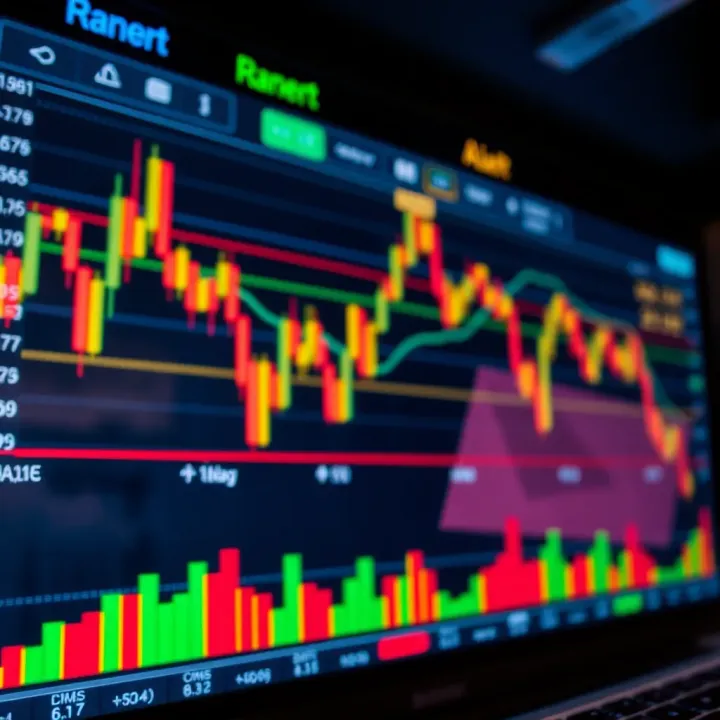
This article aims to walk you through the basics and beyond—starting from what common patterns look like on live charts, how to find them in real time, and, importantly, applying these insights to improve your trading choices. Whether you’re a beginner or you’ve been in the game a while, refining your ability to read these patterns can be a game changer.
Keep in mind: Live chart pattern recognition isn’t about finding a crystal ball; it's about understanding tendencies and probabilities to make smarter trading moves.
By breaking down these concepts into bite-sized, practical chunks, we'll cover:
The most common chart patterns and their significance
How to spot these patterns as they form on live trading platforms like Zerodha Kite or TradingView
Lessons from real-world trading examples for clearer understanding
Getting familiar with live chart patterns can cut through the noise and help you trade with more confidence and less guesswork. So, let’s get started.
Live chart patterns are the bread and butter of many traders who rely on technical analysis to make quick, informed decisions. Understanding these patterns lets you catch market vibes as they happen instead of playing catch-up later. It’s like having a radar that spots shifts in price action, helping you time your entries and exits better.
Why does this matter? Well, in fast-moving markets like those in India, prices can swing wildly within minutes—sometimes seconds. Spotting these patterns live can mean the difference between catching a winning trade or missing it entirely. For example, identifying a "flag" pattern forming on the Nifty 50 chart right when it’s unfolding can give you a heads-up to jump in before the price breaks out.
Being familiar with live chart patterns sharpens your market awareness. It’s not just about guessing where the price might go, but understanding the dance between bulls and bears as it happens. This practical edge can help reduce guesswork and boost confidence.
Live chart patterns refer to recognizable formations that price movements create over time, seen in real-time on trading charts. These patterns signal potential future price actions based on historical behavior. The idea is simple: history tends to repeat itself, and price tends to follow certain paths in the shape of these patterns.
For instance, a "triangle" pattern forming on the stock chart of Tata Motors during live trading points out a tightening price range that usually leads to a breakout. Traders watch for this to position themselves accordingly. The purpose is to provide a visual cue—an early warning system that guides buying or selling decisions with better timing.
Static charts are like photos—snapshots of past price movements, helpful for studying but not always timely. Live charts, on the other hand, are like videos, streaming price changes as they unfold. This means you can catch emerging patterns early and react accordingly.
For example, if you’re following Reliance Industries on a live chart, you’ll notice the price forming a "head and shoulders" pattern as it develops. If you rely on a static daily chart, you’ll only see it after the pattern is complete and possibly too late to act. Live data also includes real-time volume changes, which are key to confirming whether a pattern will hold or fail.
Chart patterns help traders anticipate what might happen next based on patterns that have played out before. When traders spot common shapes like "double tops," "flags," or "channels," they use these as clues suggesting a continuation or reversal in price.
Take the example of a "double bottom" forming on Infosys’ share price intraday. A trader recognizes it as a sign the price may be ready to bounce back, indicating a potential buying opportunity. While there’s no guarantee, these signals improve the odds of predicting price direction compared to random guesswork.
Beyond what might happen, the when is just as important. Chart patterns give traders a more precise window to enter or exit trades. Catching a breakout from a "pennant" pattern early can mean getting in at a better price before the rest of the market jumps in.
For example, suppose a live chart shows Sun Pharma forming a "flag" after a strong upward move. Traders waiting for confirmation of the breakout from the pattern’s resistance level can time their entry better—avoiding premature moves that might lead to losses.
Spotting and acting on live chart patterns isn’t a guarantee, but it equips you with a roadmap that’s proven useful time and again in different market scenarios. It helps not only in understanding market mood swings but also in sharpening your instinct for timely decisions.
By understanding what live chart patterns are and why they’re valuable, you set the stage for deeper insights into how to spot, confirm, and trade them effectively. The rest of this article will build on this foundation with common patterns, tools, and tips for practical application.
Understanding common live chart patterns is a must for any trader serious about improving their timing and decision-making skills. These patterns provide visual cues about where the market might head next, based on historical price moves. Recognizing them quickly on a live chart can mean catching opportunities before they become obvious to the crowd.
Traders often focus on specific formations because these patterns tend to repeat themselves under similar market conditions. This predictability, while not foolproof, adds a layer of confidence to trading strategies. For instance, spotting a trend continuation pattern could signal a good time to stay in a trade, while a reversal pattern might hint at an exit or a new entry on the opposite side.
It’s important to note that live data adds a level of urgency—patterns appear in real time and evolve fast. Hence, familiarity with these common types lets you react promptly rather than second-guessing what the chart might be suggesting.
Flags and pennants are quick, sharp pauses in the market during strong uptrends or downtrends. They usually form after a big price move, like a sprinting runner catching their breath for a second before pushing ahead. Flags appear as small rectangles slanting against the prevailing trend, while pennants look like tiny symmetrical triangles that taper to a point.
The key characteristic is their short duration and tight price range compared to previous moves. Traders watch these because they often signal the trend will resume once the consolidation ends. For example, if Reliance Industries shares surge and then form a small bullish flag on the 5-minute chart, this could be a hint the rally is far from over.
Actionable tip: Enter trades when price breaks out of the flag or pennant in the direction of the prior trend, using stop losses placed just outside the pattern for risk control.
Triangles come in a few flavors—ascending, descending, and symmetrical—and they represent a battle between buyers and sellers. The price action squeezes into a tighter range before a breakout. Unlike flags, triangles often last longer and suggest indecisiveness in the market.
An ascending triangle, for example, has a flat top resistance with rising lows, hinting at stronger buying pressure. This is common in stocks like TCS during accumulation phases. Descending triangles show the opposite, with flat support and falling highs.
The breakout direction often indicates what happens next:
Break above resistance in an ascending triangle signals bullish movement.
Break below support in a descending triangle warns of bearish action.
Traders use volume spikes at breakout points to confirm the move isn't a false alarm.

The head and shoulders pattern is like a market’s way of saying, “I’ve reached a cliff.” It consists of three peaks: a higher middle peak (head) with two lower shoulders on each side. This pattern signals a trend reversal—from bullish to bearish or vice versa (inverse head and shoulders).
For example, if Infosys shows a classic head and shoulders on its 15-minute chart after a long run-up, it might be signaling sellers stepping in aggressively.
The neckline, connecting the lows after the shoulders, acts as the key level. A break below (in a regular head and shoulders) confirms the reversal and often triggers a sharper price decline.
Traders usually place stop losses above the right shoulder and target a price move roughly equal to the distance from the head to the neckline.
Double tops and bottoms are simple yet powerful reversal clues. Double tops look like an "M" with two peaks around the same price resistance level, suggesting the asset struggles to move higher twice. Double bottoms form a "W" shape, showing support holding twice against downward pressure.
Take HDFC Bank as an example: if its share price hits 1500 twice but fails to break higher, it might pull back soon, forming a double top. The neckline in these patterns is the support or resistance level between the two peaks or troughs.
Traders wait for the price to break the neckline to confirm the reversal before entering trades, often with tight stops just above or below the pattern extremes.
Rectangles form when price moves sideways within a well-defined support and resistance zone. They represent a tug-of-war that stalls the trend temporarily. Unlike the sharp pause in flags, rectangles can last longer and indicate market indecision.
For example, in the aftermath of a rally, Tata Steel might trade between ₹100 and ₹105 for several sessions. This sideways price action creates a rectangle.
Traders watch for a breakout above or below the rectangle to catch the next significant move. Volume often dips inside rectangles and spikes at breakouts, confirming momentum.
Channels are like train tracks: parallel lines that contain price swings moving either up, down, or sideways. An ascending channel shows higher highs and lows, indicating steady buying interest. Descending channels reflect persistent selling.
Axis Bank shares, for instance, often trend inside channels on daily charts, allowing traders to buy near the lower line and sell near the upper line.
Channels help traders spot entry and exit points and define risk zones by setting stop losses just outside the channel boundaries.
Knowing these common live chart patterns equips you with a visual toolkit that transforms price charts from confusing lines into meaningful setups. Whether it’s spotting a quick flag during intraday trading or recognizing a head and shoulders for swing trades, these patterns can guide smarter, more confident trading decisions.
Spotting chart patterns in live data is what separates a reactive trader from a proactive one. In the fast-moving markets of India, recognizing these patterns in real time can give you an edge — allowing you to catch trends as they form rather than after they’ve run their course. It’s not just about identifying shapes on a graph; it’s about understanding what the market's telling you right now, so you can make smarter, timely decisions.
Think about the Nifty 50 index fluctuating throughout the day. If you spot a pattern like a triangle forming, the immediate question is: will it break upwards or downwards? Catching this early helps in positioning before others jump in.
Tools and insight come hand-in-hand here; you need the right software to keep up with streaming data, plus an understanding of signals like volume and support levels to confirm what you’re seeing. Without this, spotting live patterns is like trying to catch a slippery fish with bare hands.
India's trading crowd frequently leans on platforms like Zerodha’s Kite, Upstox Pro, and Angel Broking’s ARQ. Each has its party tricks: Zerodha's Kite scores high on a clean interface and quick-refresh charts, which is great when every second counts. Upstox Pro offers customizable charts and a suite of technical indicators that are easily adjustable for the live action.
Angel Broking’s ARQ stands out with its AI-driven suggestions, helping traders spot potential patterns even in choppy markets. These platforms integrate seamlessly with NSE and BSE feeds, ensuring near-real-time data flow which is vital for live pattern recognition.
If your platform lags by even a few seconds, those “live” patterns become stale news.
When choosing software or online tools for spotting live chart patterns, prioritize:
Real-time data updating: Delays can cost you dearly.
Variety of indicators and drawing tools: To plot trendlines, channels, and retracements quickly.
Customization of timeframes: Sometimes a 5-minute chart tells a different story than a 1-minute one.
Alerts and notifications: These can notify you when your identified pattern is nearly complete or if a breakout occurs.
Mobile and desktop compatibility: Markets don’t stop when you’re away from your desk.
Having these features means you can respond without fumbling around, which is often when opportunities slip through your fingers.
Volume acts like the heartbeat of the chart. It tells you whether a price move is backed by conviction or just idle noise. For example, a breakout from a head and shoulders pattern accompanied by high volume is a sign to sit up and take notice. Low volume breakouts, on the other hand, tend to be false alarms.
In Indian markets, volume spikes during major economic announcements or company results; watching volume closely alongside price action helps filter the signal from the noise.
Moving averages smoothen price data and help identify trend directions. A commonly used setup is the 20-day and 50-day moving averages crossover. If the shorter 20-day line crosses above the 50-day from below, it could signal a bullish move.
These averages add context to live charts, helping confirm if a pattern’s breakout aligns with an overall trend or is going against it.
Support and resistance are like invisible walls on charts. Support acts as a floor where prices tend to bounce back up, while resistance is a ceiling that prices struggle to climb above. Identifying these levels on live charts helps anticipate where price actions might stall or reverse.
For example, a double bottom pattern forming right at a significant support line on a live chart increases the reliability of that pattern for a potential bounce. Conversely, a breakout above a strong resistance level can signal a new upward trend.
Leveraging these levels alongside live pattern spotting lets you anticipate market moves rather than simply react to them.
Mastering these tools and signals doesn’t just improve your chart-reading skills; it also sets the stage for smarter, faster trading decisions under real market conditions.
Trading using live chart patterns isn't just about spotting shapes on a graph. It’s about combining those patterns with smart analysis and tight risk management to make solid trading decisions. Many traders jump into a trade just seeing a pattern, but without confirming signals and risk controls, the result can be costly. Here, we look at practical tips that help you trade these patterns more effectively and safely.
Oscillators like the RSI (Relative Strength Index) and Stochastic Oscillator provide clues about whether a stock is overbought or oversold, which traditional chart patterns might not reveal alone. For instance, spotting a double bottom pattern is promising, but if the RSI also reads below 30, indicating an oversold condition, it reinforces the likelihood of a bullish reversal. This dual confirmation can give traders more confidence to enter.
In practice, check if the oscillator aligns with the expected move from the pattern. If they contradict—say, a bullish pattern but the RSI is trending down—it might be a sign to wait or tighten stops. Oscillators add a layer of insight, effectively serving as a validating tool, reducing the chances of false signals.
Assessing how strong the current trend is can prevent jumping into weak or fake breakouts. Indicators like the Average Directional Index (ADX) help here. A rising ADX above 25 typically signals a strong trend, so if a wedge pattern is showing a breakout confirmed by a strong ADX, it’s a more reliable entry point.
Practical tip: Always measure the trend strength before trading the breakout or breakdown of a pattern. If the trend is weak, the pattern might fail, leaving you stuck in a losing position. This simple check prevents many unnecessary losses.
Stop losses are your safety net—they define exactly how much you’re ready to lose if a trade goes south. When trading chart patterns like a head and shoulders, set your stop loss just above the right shoulder (for short trades) or below the neckline (for long trades). This limits losses if the market suddenly reverses.
Sensible stop-loss placement doesn’t just protect capital; it also helps keep emotions out of trading decisions. You won’t have to guess when to exit because the exit point is clearly defined.
Even the best trade setups can falter, so controlling how much you risk per trade is vital. Position sizing means calculating your trade size based on your stop-loss and the maximum risk you’re prepared to bear. For example, if you’re willing to risk Rs. 1,000 on a trade and your stop loss is 2%, you adjust the quantity of shares accordingly.
Proper position sizing keeps losses manageable and portfolio health intact. It also avoids the pitfall of over-trading or going all-in on a single pattern, which can quickly wipe you out if things don’t go as expected.
Smart trading happens when you blend pattern recognition with solid analysis and risk control. Tools like oscillators and trend strength indicators confirm setups, while stop losses and position sizing protect your pocket in the unpredictable markets.
By sticking to these practical tips, you’ll be better equipped to read live chart patterns confidently and trade them with discipline. This approach isn’t just theory—it’s how professional traders keep losses small while letting their winners run.
Live chart patterns are powerful tools but leaning on them alone can sometimes lead traders astray. They offer signals based only on price moves and volumes but ignore broader market realities. Without this context, even the clearest patterns can misfire, causing unexpected losses. Knowing their limitations helps traders use these patterns wisely and avoid costly mistakes.
Recognizing false signals is a vital skill. A false breakout happens when the price moves beyond a pattern boundary but quickly reverses back, misleading traders into thinking a trend started or ended. For example, if a stock in the Nifty 50 index seems to break out of a triangle pattern but drops back soon after, that’s a false signal. To spot this, traders watch volume—true breakouts usually come with strong volume. Also, waiting for a confirmation candle to close past the boundary can save you from jumping the gun.
Avoiding common pitfalls involves more than spotting false signals. One classic trap is chasing patterns aggressively without considering the overall market condition. Say a head and shoulders pattern appears in a volatile midcap stock during a broad market sell-off. Ignoring this bigger picture can lead to wrongly timed trades. Another mistake is relying solely on patterns without setting stop losses, which can quickly turn small uncertainties into bigger losses. Keeping risk management front and center prevents pattern failures from wiping out your gains.
Fundamental analysis complements live chart patterns by providing insights into the company’s health and market position. For instance, a technical pattern might suggest a rally, but if the company just reported a poor earnings quarter or faces regulatory hurdles, the pattern’s reliability drops. Fundamentals help filter out patterns that might mislead due to external factors.
Sentiment indicators offer a different angle by gauging market mood. Tools like the put-call ratio or volatility index (VIX) give clues about traders’ fear or greed levels. For example, if sentiment indicators signal extreme optimism while live charts show a bullish breakout, caution is warranted—markets often reverse after euphoria. Combining these signals with chart patterns results in smarter, more balanced trading decisions.
Relying on live chart patterns alone is like reading a map without knowing your destination – you might move fast but could end up lost. Combining technical patterns with fundamentals and sentiment paints a clearer path to smarter trades.
By understanding these limitations and adding layers of analysis, traders can sharpen their strategies, protect their capital, and improve their odds of success in markets that can sometimes feel like a wild ride.
Understanding live chart patterns becomes significantly more tangible when you look at real-life examples from familiar markets. For Indian traders, digging into local stocks like those listed on the NSE or BSE can give practical insights that generic textbook charts simply can't provide. The Indian market has its quirks — from volume surges around budget announcements to sectoral rallies influenced by government policies — and recognizing these factors alongside chart patterns boosts your trade decisions.
Take Reliance Industries, a Nifty 50 heavyweight, for example. Its chart frequently shows classic patterns like ascending triangles during strong market phases. Spotting this pattern live, alongside volume spikes, provides clues about potential breakouts. Traders who caught this early could plan entries before strong upward moves. It’s a clear instance where knowing live chart patterns within a top-index stock leads to smarter trades, especially since Nifty 50 shares are heavily traded and reflect broader market sentiment.
Now, midcap stocks such as Adani Enterprises behave a bit differently. They often display consolidation patterns like flags or pennants but with less predictable volume behavior. Identifying patterns here demands more attention to confirm signals, like waiting for volume confirmation or checking related sector performance. Middle-sized companies react faster to news, so live pattern recognition helps traders capitalize on these price swings before the crowd figures it out.
Volatility is a double-edged sword for pattern traders. High volatility, which Indian markets often see around events like RBI policy announcements, can cause patterns to break unexpectedly. For example, a head and shoulders pattern can fail when sudden swings dominate. Traders need to adjust their expectations — in volatile times, patterns may still form but often require tighter stop losses and quicker exits.
Volume acts like the heartbeat of pattern confirmation. Without healthy volume, a breakout or breakdown might just be a false signal. In India, volumes in stocks like Tata Motors can surge due to FII activity or domestic investor interest. Watching live volume alongside a breakout pattern helps validate moves. Conversely, low volume during a breakout indicates weak conviction, and traders should be cautious.
A key takeaway: Live chart patterns become far more reliable when combined with real-time volume analysis and an eye on market volatility, especially in dynamic markets like India.
In summary, real-world examples from both giant and midcap shares show the challenges and benefits of spotting live chart patterns. Understanding how volatility and volume influence these patterns equips traders to make more informed, timely decisions in the Indian market context.
📈 Learn key market chart patterns, their meaning, and how to spot them for smarter trading decisions in India’s market environment.
Discover the most profitable chart patterns 📈 used by traders to spot key price moves. Learn to recognize & apply them in stocks & forex markets with expert tips.

📈 Explore live intraday trading in India with practical tips on strategies, tools, risk control, and market moves to boost your day trading skills today.

Learn live forex trading basics, strategies, risk tips, and platform selection 🔍. Stay ahead with real-time data and tackle challenges confidently! 📈
Based on 11 reviews