

How to Convert Octal Numbers to Binary Easily
Learn how to convert octal numbers to binary easily 🧮. Discover practical steps, tips, and tools for accurate conversion and avoid common mistakes.
Edited By
Lily Evans
Binary data plays a vital role in computing, representing everything from images and audio to documents and executable files. Converting such raw binary streams into a readable or usable file format like PDF (Portable Document Format) is a common requirement across multiple fields, including finance and data analysis. PDFs provide a widely accepted, versatile way to share and archive information securely.
This conversion process involves translating the binary data, which is essentially a series of 1s and 0s, into a structured format that PDF readers can interpret. For professionals like investors, traders, and analysts, efficiently handling PDF documents generated from binary data can streamline reporting, data sharing, and compliance tasks.
Understanding how to convert binary data to PDF files opens doors to more automated workflows, especially when dealing with bulk data exports from financial systems or research databases.
Several methods exist for this conversion, ranging from programming techniques that decode the binary into PDFs, to using specialised software tools that handle this behind the scenes. The challenge is to ensure the resulting PDF is valid, accessible, and accurately represents the original data content. Problems like corrupted files or incomplete rendering often stem from improper binary-to-PDF conversion.
In this article, you will learn about:
The fundamental concepts of binary data and PDF file structures
Practical ways to convert binary streams into PDF documents using programming languages such as Python and Java
Common issues faced during conversion and tips to avoid them
Use cases that demonstrate the relevance of this conversion in real-world finance and data analysis scenarios
By the end, you'll have a clearer grasp of the technical background and the right tools to create PDFs from binary data reliably, helping you manage your documents more effectively in a professional setting.
Grasping the core concepts of binary data and PDF files is essential for anyone handling document conversion or dealing with digital archives. Knowing how binary data is structured and how PDFs package their contents makes it easier to convert raw data into properly formatted, reliable documents. This knowledge is especially useful for developers, analysts, and finance professionals who often work with electronic records, invoices, or reports.
In computing, binary data refers to information stored in a format that only uses two symbols: 0 and 1. Instead of human-readable text, binary data represents raw information such as images, audio, video, or executable files. Practically, any file on your computer—whether it is a photo or a spreadsheet—is stored as a sequence of binary digits. For example, a scanned cheque image saved in a system is simply a long string of binary data.
Common sources of binary data include scanners producing digital images, devices capturing sensor readings, or software that exports files like ZIP archives or multimedia. When financial analysts receive scanned statements, these arrive as binary data needing conversion to usable formats. Similarly, databases often store documents or blobs (binary large objects) that require decoding before viewing.
The Portable Document Format (PDF) is a widely accepted file standard designed to present documents consistently across different devices. At its core, a PDF file combines text, images, and vector graphics into a structured format. The file itself is composed of objects like streams, dictionaries, and cross-reference tables that efficiently store data.
PDFs hold text and images differently from simple binary blobs. Text is stored with fonts, character codes, and layout instructions, enabling search and selection. Images, on the other hand, are embedded as binary streams compressed with algorithms to keep file sizes manageable. This separation allows PDFs to maintain clarity—even when printed or zoomed—and ensures documents from various sources display identically.
Understanding the difference between raw binary data and how it fits into the PDF structure matters because it guides how files should be processed or generated. A binary stream might represent an embedded image in a PDF, but converting that stream directly without structuring it will not yield a viewable document.
By learning these fundamentals, you can better work with converters and coding libraries that transform binary streams into rich PDF files suitable for business or archival needs.
Converting binary data into PDF is more than just a technical trick; it’s about making raw, often unusable data accessible and useful. Binary data comes in various forms—scanned images, encoded text, compressed files—and understanding how to interpret and embed this data correctly in PDF files is key for professionals handling documents, reports, or data exchange.
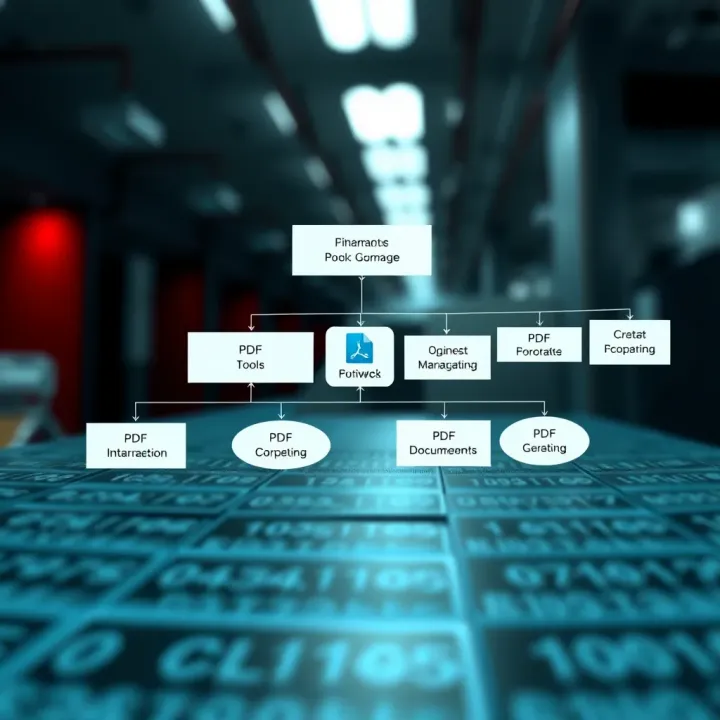
Understanding raw binary to structured data is essential before conversion. Binary data itself is a series of 0s and 1s, but when creating a PDF, these need to be organized into structures the PDF format recognises, such as streams for images or encoded sections for text. For example, scanned documents generate binary image streams that must be properly embedded as images inside the PDF, preserving resolution and format. Similarly, digitally encoded text might require conversion from a binary character set into Unicode so it displays correctly and remains searchable.
Practically, many conversion tools handle this mapping behind the scenes, but for those writing custom scripts or working with unusual binary sources, knowing that a binary stream represents, say, a PNG image or font data helps in preparing it properly for the PDF’s internal architecture.
Encoding and decoding considerations play a significant role, especially when binary data undergoes transformations like Base64 encoding to ensure safe embedding within PDFs. Encoding converts raw binary into a text-safe format, which some PDF components or tools require. Decoding restores this back into binary form when the PDF is read or extracted. Handling this correctly avoids data corruption.
For example, an email attachment containing a scanned invoice might be Base64 encoded to transport safely; converting this to a PDF involves decoding it back to binary before embedding it as an image stream. Ignoring these steps can cause garbled PDFs or unreadable content.
Scanned documents and image data are among the most common reasons to convert binary to PDF. When paper documents are scanned, the output is usually bitmap images in a binary format like TIFF or JPEG. These must be wrapped inside the PDF so that each page corresponds to an image stream. This makes archival and electronic sharing easier, especially for financial records or legal documents. The quality and compression chosen impact both readability and file size, so trade-offs become important here.
Embedded files and attachments in PDFs provide another practical application. PDFs can act as containers not only for visible content but also for binary attachments like certificates, spreadsheets, or multimedia files. Investors or analysts might receive a PDF containing embedded Excel sheets or key financial models as attachments, all stored as binary streams within the PDF structure. Correctly converting and linking these attachments ensures the PDF remains a one-stop reference for all related documents.
Proper handling of binary data during PDF conversion ensures documents are accurate, accessible, and maintain integrity, which is especially vital in finance and analytics where documents often support decision-making and regulatory compliance.
The link between binary data and PDF is thus a foundation for creating documents that are both functional and reliable in professional contexts.
Converting binary data into PDF format relies heavily on suitable tools and methods, which simplify the process and ensure the output document meets intended quality and usability standards. These options range from user-friendly software applications to programming libraries, each catering to different needs depending on technical expertise and volume of data.
Standalone converters and apps provide a straightforward solution for users who need to convert binary files to PDFs without writing any code. These applications often support a variety of input binary formats, including images, scanned documents, or raw binary streams from devices. For instance, tools like Adobe Acrobat Pro allow users to import raw binary files such as TIFF or BMP and convert them into searchable PDFs, preserving formatting and quality. Such apps often offer batch processing, which is handy when dealing with large numbers of files, such as digitising archives or reports.
In contrast, online platforms that handle binary to PDF conversion offer a convenient, no-installation option. They allow uploading binary files directly through a browser, performing the conversion on remote servers. Websites like Smallpdf or PDFCandy support a range of binary inputs, making them particularly useful for quick tasks or when operating on a low-spec device. However, these platforms may limit file size and raise privacy concerns for sensitive financial or confidential data, so they suit casual use more than secure enterprise environments.
Using Python libraries for PDF generation is popular due to Python’s readability and extensive ecosystem. Libraries such as PyPDF2, ReportLab, or PDFMiner can parse binary streams and convert them into structured PDF files. For example, developers working with scanned document archives can use ReportLab to programmematically embed images and add metadata, creating searchable or form-filled PDFs. Python's flexibility supports custom workflows like adding digital signatures or encrypting PDFs, valuable for financial professionals needing secure document handling.
For enterprise-level or desktop applications, Java and .NET tools for binary embedding offer robust, scalable solutions. Libraries like iText (for Java) or PDFsharp (for .NET) efficiently embed raw binary content into PDFs, handling complexities like font embedding and object compression. A trading firm, for example, might use these tools to convert live binary streams of transaction logs into well-formatted PDF reports automatically. This integration supports corporate IT infrastructure where batch processing and custom workflows are standard.
Lastly, handling binary streams in JavaScript caters to web-based applications that generate PDFs on the client side or server side using Node.js. Libraries such as PDFKit enable manipulation of binary data directly in the browser or back-end, allowing finance portals to provide real-time downloadable reports without intermediate file storage. This technique benefits users needing quick access to transaction summaries or charts in PDF while keeping processing local to ensure privacy.
The choice of tool or technique depends on the use case—whether it is for a quick conversion of a few files or large-scale automated processing within financial systems. Understanding these options helps to pick the right fit that balances ease, security, and control.
Converting binary data to a usable PDF format is seldom straightforward. Several hurdles need attention to achieve reliable, high-quality outputs. Addressing these challenges enhances document integrity and user experience, whether for financial reports, legal documents, or academic papers.
Common errors during conversion often arise when the binary data is incomplete, malformed, or contains unexpected characters. For instance, if a scanned document saved as raw binary suffers transmission errors, the resulting PDF may have unreadable sections or fail to open altogether. Binary data must be validated before conversion to avoid such pitfalls. Tools that check for data integrity can catch errors like truncated streams, missing headers, or encoding mismatches early on.
Compatibility issues further complicate this process. Different PDF viewers like Adobe Acrobat, Foxit Reader, or native browser plugins support varying PDF features. If the conversion process creates PDFs with unsupported elements such as obscure fonts or encryption methods, users may face display errors or inability to search text. Conforming to widely accepted PDF standards (like PDF/A for archiving) ensures better compatibility across readers and devices.
Ensuring error-free conversion and broad reader compatibility is vital, especially when sharing critical documents within financial or official workflows.
Compression methods play a key role in managing PDF file sizes without sacrificing content clarity. Using well-established algorithms like ZIP or JPEG2000 allows large binary inputs, such as scanned images, to be compacted efficiently. However, aggressive compression can introduce artefacts and degrade image quality, making documents harder to read or print. Choosing the right compression level requires balancing storage constraints against the need for sharp, clear visuals.
The impact on document fidelity cannot be overlooked. Overcompression of binary data containing charts or fine text details often results in loss of crucial information. For example, financial analysts sharing detailed reports with intricate graphs need sharp rendering to interpret data accurately. Maintaining fidelity means preserving original resolution and colour depth while keeping file sizes manageable. Using selective compression—compressing images but not text—or embedding fonts ensures PDFs remain accessible and clear.
Successfully navigating these challenges means PDFs generated from binary data can serve their purpose effectively, whether for examination, presentation, or archival use.
Creating PDFs from raw binary data demands careful handling to ensure the final document is both reliable and user-friendly. Following best practices not only helps avoid common pitfalls but also improves the PDF’s usability, especially for finance professionals and analysts who rely on accurate and accessible reports.
Before converting binary data into a PDF, it's essential to verify that the data hasn't been corrupted. Faulty or incomplete binary streams can lead to broken PDFs or display errors. For example, if you're handling digital receipts or stock reports stored as binary blobs, any corruption could render crucial financial details unreadable. Simple checks like verifying file size, hash values (MD5 or SHA256), or using checksum utilities help ensure the binary data is intact before processing.
Cleaning and preparing the binary data before conversion can significantly affect the quality of the resulting PDF. For image data embedded within the binary stream, optimising resolution and colour depth reduces file size without sacrificing clarity. Similarly, removing unnecessary headers or padding bytes streamlines the process. For instance, when converting scanned documents to PDFs, pre-processing the image binary to enhance contrast or remove noise yields more readable and compact PDFs.
Embedding metadata such as author, creation date, title, and keywords into the PDF helps with indexing and future retrieval, especially when handling large volumes of financial documents or reports. Tags also play a role in making PDFs accessible to screen readers, which benefits analysts who may use assistive technologies. Without proper metadata, searching for specific reports in archives becomes tedious and error-prone.
Converting binary data into PDFs that contain real text, rather than just images, allows users to select, copy, and search content efficiently. This is invaluable for finance professionals seeking specific terms or numbers quickly in lengthy reports. Optical Character Recognition (OCR) tools can convert image-based binary data into searchable text within PDFs. For example, annual reports scanned into binary form become far more useful when text searchability is enabled.
Best practices in creating PDFs from binary data safeguard data accuracy and enhance document usability, ultimately saving time and reducing errors in financial analysis.
Following these guidelines ensures that the PDFs you create from binary data are both trustworthy and easy to work with, serving the practical needs of investors, traders, and students alike.
Learn how to convert octal numbers to binary easily 🧮. Discover practical steps, tips, and tools for accurate conversion and avoid common mistakes.
Learn how to convert decimal numbers to binary with step-by-step methods, examples, and practical insights for students and tech enthusiasts in India 🇮🇳💻

Learn how to convert octal numbers to binary with clear steps, examples, common mistakes, and practical uses explained in simple terms. 🔢💡

Learn how to convert decimal numbers to binary with easy methods. Understand binary basics, tools, challenges & why it matters in computing 💻🔢
Based on 5 reviews