
Choosing the Best Broker for Forex Trading in India
📊 Looking to pick the best forex broker in India? Explore key features, regulatory checks, and top broker comparisons for safe and smart trading decisions. 💹
Edited By
Charlotte Reed
Forex trading in India operates within a unique framework shaped by strict regulations and a growing market interest. Before you jump in, it’s essential to understand the basics and see which options fit your trading style.

The Reserve Bank of India (RBI) governs forex trading, restricting it to currency pairs involving the Indian Rupee (INR) and certain approved foreign currencies. What this means is that trading exotic pairs like GBP/JPY directly from India isn’t allowed through domestic exchanges. Instead, Indian traders focus on pairs such as USD/INR, EUR/INR, and GBP/INR.
Additionally, the Securities and Exchange Board of India (SEBI) oversees brokers and exchanges, ensuring that platforms comply with Indian laws. This dual oversight serves as a protective barrier against fraud and unfair practices but also narrows the range of accessible forex instruments.
Picking a reliable broker is crucial. Here’s what to look for:
Regulation: Check if the broker is registered with SEBI or other recognized regulators.
Trading Platform: Opt for user-friendly platforms with robust tools like MetaTrader 4 or 5.
Spreads and Fees: Lower spreads reduce trading costs, especially for active traders.
Customer Support: Responsive support can save you headaches during critical moments.
Popular Indian brokers like Zerodha and Upstox offer forex trading mainly through currency futures and options, which are legal and regulated. On the other hand, some international brokers accept Indian clients but may operate under different jurisdictions, posing compliance risks.
Since direct spot forex trading in India faces limitations, most investors trade forex through:
Currency Futures: Contracts that obligate the purchase or sale of a currency pair at a predetermined price on a future date.
Currency Options: Derivatives giving the right but not the obligation to buy or sell at a set price before expiration.
These instruments serve as effective alternatives, allowing traders to speculate on currency movements within the legal framework.
Keep in mind, trading forex in India requires a clear understanding of its regulatory environment to avoid compliance pitfalls.
If you're new, start with demo accounts offered by brokers to test strategies without risking capital. For example, Zerodha’s Kite platform provides simulated trading, giving hands-on experience with INR pairs.
This section sets the stage for exploring which platforms and strategies align best with your trading goals in the Indian context.
Getting started with forex trading in India means understanding both the opportunities and the rules that come with it. Forex, or currency trading, offers traders a chance to make profits by exchanging different currencies. With the Indian economy becoming more integrated with the global market, many investors are looking at forex as a way to diversify their portfolios and tap into international markets.
The forex market is the largest financial market worldwide, handling over $6 trillion in daily trades. India’s share may be smaller, but interest has surged thanks to better internet access and technology. Platforms like Zerodha and Upstox have made trading more accessible, and newer forex-specific brokers like ICICI Direct and HDFC Securities bring forex into everyday investing.
Many Indians are drawn to forex because of the 24-hour market availability and high liquidity. For instance, a trader in Mumbai can trade the EUR/USD pair during New York hours, which helps them take advantage of global economic news in real time. Plus, currencies are affected by numerous factors, providing plenty of trading opportunities.
However, most forex trading in India is limited to currency pairs involving the Indian rupee (INR), regulated distinctly to avoid risks associated with offshore forex trading.
The Reserve Bank of India (RBI) and the Securities and Exchange Board of India (SEBI) are the main bodies overseeing forex trading rules. RBI restricts forex trading primarily to currency pairs involving INR and companies or individuals approved by them. This is to control foreign exchange risks and capital flight.

SEBI licenses brokers that offer forex trading within this framework, ensuring they maintain fair trading practices and protect traders. For example, brokers must follow strict Know Your Customer (KYC) norms and maintain transparent pricing.
Traders should only deal with SEBI-registered brokers to avoid illegal or unregulated platforms. Indian law specifically bans trading in foreign currency pairs that do not include the INR, which means off-shore trading platforms are illegal and can risk your money.
Understanding India’s forex market and regulation is key before you start trading. Restriction to INR pairs and oversight by RBI and SEBI aim to keep this market safer for Indian traders.
This overview prepares you to make informed choices about platforms, strategies, and compliance when dealing with forex trading in India.
Choosing the right forex broker is a key step for any trader in India. The broker acts as the bridge between you and the forex market. Picking the wrong one can lead to higher costs, poor execution, or even legal trouble. Given the local regulatory landscape and the variety of broker options, it's crucial to make an informed decision that suits your trading style and goals.
Licensing and Regulatory Compliance
A reliable broker must hold valid licenses from recognized financial authorities. In India, forex trading is tightly regulated, and brokers should comply with rules set by entities like the Securities and Exchange Board of India (SEBI). Internationally, brokers might be licensed by authorities such as the Financial Conduct Authority (FCA) in the UK or the Cyprus Securities and Exchange Commission (CySEC). Ensuring your broker is properly licensed protects you from fraud and ensures your funds are segregated and safe. For example, choosing a broker regulated by the FCA means they meet strict standards of transparency and security.
Trading Platforms and Tools
The platform you trade on matters a lot. Look for brokers offering user-friendly and stable platforms like MetaTrader 4 or 5, or proprietary software with advanced charting, real-time quotes, and risk management tools. Mobile app availability is also important for traders who want to stay connected on the go. For instance, platforms that allow setting stop-loss orders directly on charts can save you from unexpected market swings. Besides, access to economic calendars or news feeds integrated into the platform offers real-time insights crucial for timely decisions.
Spreads and Fees
Costs eat into trading profits, so tight spreads and transparent fee structures are essential. Brokers typically earn through spreads—the difference between buy and sell prices—or commissions, or both. In India’s forex space, some brokers offer fixed spreads, while others have variable spreads depending on market conditions. For example, a broker charging a 1-pip spread on EUR/USD might be a better choice than one with a 3-pip spread. Watch out for hidden fees like withdrawal charges or inactivity fees.
Customer Support Quality
When issues arise, quick and helpful customer service is a lifesaver. Look for brokers providing 24/7 support across multiple channels—phone, email, chat—with staff familiar with forex trading and Indian regulations. Imagine needing help to withdraw funds or facing platform glitches; fast and clear communication from your broker’s support team can prevent major headaches.
Broker Comparison
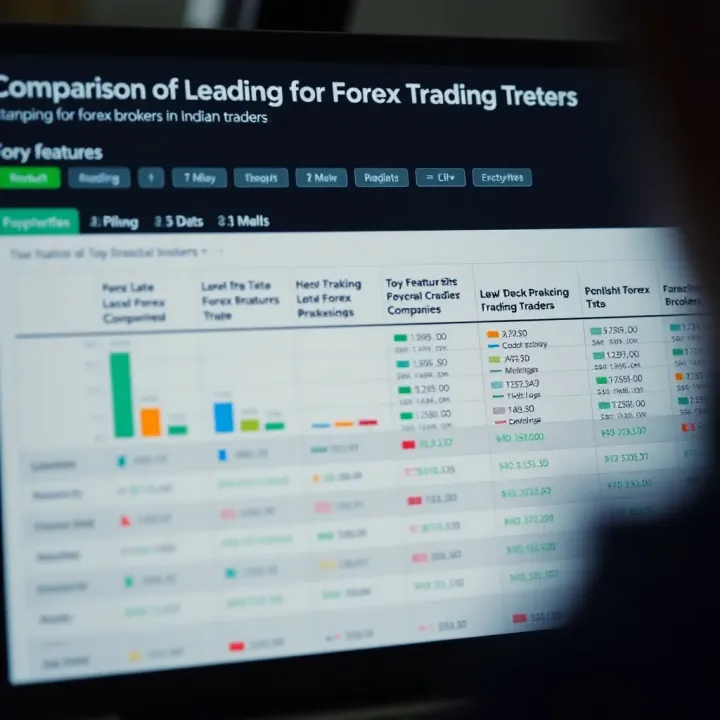
Comparing brokers side by side reveals variations in cost, platform features, asset offerings, and support. Popular brokers in India include IC Markets, FXTM, and OctaFX. Each caters to different trader needs—IC Markets offers raw spreads suitable for scalpers, while FXTM caters to beginners with educational resources. Comparing fees and leverage options helps match brokers to your risk tolerance and trading frequency.
Unique Features and Benefits
Some brokers provide extras like copy trading, educational webinars, or demo accounts with virtual funds to practice. For instance, OctaFX allows users to copy top traders' strategies, which can benefit newbies lacking time for research. Others might offer flexible lot sizes or customizable leverage up to 1:100, which can make a big difference for experienced traders aiming for larger positions.
User Experience and Reviews
Real trader feedback offers insights beyond marketing claims. Reading user reviews on forums or review sites reveals common issues like withdrawal delays or software glitches. Look for brokers with consistently high ratings for reliability and transparency. For example, a broker praised repeatedly for smooth withdrawals and responsive support generally earns trust.
Picking the right forex broker shapes your trading journey. Taking time to compare licensing, platforms, costs, and support pays off by safeguarding your investment and boosting trading efficiency.
Forex trading in India requires a solid strategy tailored to the unique market conditions and regulations. Understanding popular trading strategies helps traders make better decisions, manage risks, and adapt to volatile currency movements. This section breaks down fundamental and technical analysis, risk management, and automated trading—key pillars for success in forex trading.
Fundamental analysis focuses on economic indicators, geopolitical events, and central bank decisions impacting currency values. For example, Indian traders might watch the Reserve Bank of India's (RBI) monetary policy updates closely, as changes in interest rates can sway the Indian rupee against other currencies. In contrast, technical analysis uses price charts and patterns, like moving averages or the Relative Strength Index (RSI), to predict future price movement based on historical data.
A practical trade might combine both methods: say, observing an RBI rate hike (fundamental) alongside a bullish breakout on the USD/INR chart (technical). This combined approach lowers the chance of false signals and improves trade timing.
Managing risk is the backbone of preserving capital in the fast-moving forex market. Indian traders should never risk more than 1-2% of their trading account on a single trade. Stop-loss orders are essential to limit losses when the market moves against you. For instance, if you buy EUR/USD expecting an upward move, placing a stop-loss 20 pips below the entry helps control the downside.
Diversification also matters. Avoid putting all your funds into one currency pair; spreading risk across pairs like USD/INR, EUR/USD, and GBP/USD balances exposure. Position sizing—deciding how big each trade should be based on your account size and risk tolerance—is another cornerstone. Bottom line: no matter your strategy, managing losses ensures you stay in the game.
Automated trading systems, powered by algorithms, execute trades based on predefined rules without emotional bias. Indian traders increasingly use platforms like MetaTrader 4 or 5, where they can deploy expert advisors (EAs) to automate strategies. For example, an EA might automatically buy USD/INR when the 50-day moving average crosses above the 200-day moving average—a classic "golden cross" pattern.
Besides speed and automation, these systems allow backtesting on historical data, giving traders confidence that strategies work before risking real money. That said, robotic trading isn’t a guarantee—market conditions change, and oversight is necessary to adjust parameters and intervene when needed.
Whether you rely on analysis, risk management, or automated tools, mastering these Forex strategies equips Indian traders to navigate the market smartly and efficiently.
By grasping these core trading strategies, Indian investors can build a strong foundation, reduce errors, and enhance their chances of consistent profits in the competitive forex space.
Navigating the legal and tax landscape is vital for anyone trading forex in India. Understanding regulations safeguards you from penalties, while knowing tax duties helps you stay compliant with the Indian government’s requirements. Let’s break down the key layers.
India strictly regulates forex trading to protect investors and the economy. The Reserve Bank of India (RBI) oversees foreign exchange dealings. According to RBI guidelines, Indian residents can only trade currency pairs that include the Indian rupee (INR) on recognized exchanges like the National Stock Exchange (NSE) or Bombay Stock Exchange (BSE). Off-exchange forex trading or trading in international currency pairs like EUR/USD or GBP/USD is generally prohibited for residents.
For example, if you want to trade forex legally, you must use brokers registered with the Securities and Exchange Board of India (SEBI) or those who operate on INR pairs through NSE or BSE platforms. Engaging in forex trades outside this framework can lead to strict penalties, including fines or legal action.
Traders often overlook that dealers outside Indian jurisdiction are unavailable for legal recourse, making it risky to trade through foreign brokers not registered with Indian authorities.
Forex trading profits in India are subject to taxation depending on how frequently you trade and your overall income profile. Generally, if trading is an occasional activity, gains are treated as capital gains, either short-term or long-term, based on holding duration.
However, frequent traders might be classified as business entities by tax authorities, and profits would be taxed as business income. This classification also means you can claim related expenses like software subscriptions or internet charges as deductions.
Here are practical points to consider:
Record Keeping: Maintain detailed logs of every trade, including dates, amounts, transaction costs, and profits or losses.
Tax Filing: Declare forex gains under the right section in your Income Tax Return (ITR), typically ITR-3 or ITR-4 for businesses.
Goods and Services Tax (GST): Some trading services and tools attract GST, which traders should consider in their expense calculations.
Ignoring these responsibilities can lead to trouble with the Income Tax Department. So, always consult a tax advisor familiar with forex trading to optimize compliance and tax efficiency.
In short, knowing Indian forex laws and tax rules isn’t just about avoiding fines—it lets you plan smartly and trade with confidence within the system.
Successful forex trading hinges on more than just picking the right platform or strategy. Developing habits and mindset tailored to the market conditions in India can affect your bottom line significantly. This section highlights essential tips that help traders stay sharp, disciplined, and prepared to face the ups and downs of forex trading.
A solid trading plan is your roadmap in the complex forex market. It should clearly spell out your goals, risk tolerance, entry and exit criteria, and money management rules. Think of it as the rules of engagement that keep you from making impulsive decisions. For example, setting a fixed stop-loss on every trade limits potential losses and keeps emotions in check. Sticking to your plan consistently, even during volatile periods, builds discipline. The market often tempts traders to chase quick profits or hold losing positions hoping they'll recover—this usually leads to losses. A disciplined approach means you follow the plan no matter how tempting it is to stray.
The forex market reacts quickly to economic data and global events. Tracking key indicators like India's GDP growth rate, inflation numbers, interest rate decisions by the Reserve Bank of India (RBI), and geopolitical developments can give you an edge. For instance, a sudden change in the RBI’s policy rate often impacts the Indian rupee’s value against other currencies. Staying updated through reliable news sources or economic calendars helps you anticipate market moves rather than react late. Ignoring news is like driving blindfolded; you can’t avoid bumps ahead if you don’t see them coming.
Fraudulent schemes and scams still lurk in the forex space, especially online. Always verify that your broker is registered with appropriate regulators like the Securities and Exchange Board of India (SEBI). Avoid brokers promising guaranteed returns or high profits with little risk. Scammers often use flashy ads or pressure tactics to lure traders into depositing big sums. Remember, if it sounds too good to be true, it probably is. Also, beware of overtrading or risking too much on one trade—greed and impatience can wipe out accounts quickly. Learning from experienced traders and joining reputable forex communities may keep you informed and alert to these risks.
A carefully crafted trading plan, constant market awareness, and vigilance against scams form the backbone of a successful forex trading journey in India.
With these tips, you’re better equipped to navigate the forex market smartly and protect your investment.
📊 Looking to pick the best forex broker in India? Explore key features, regulatory checks, and top broker comparisons for safe and smart trading decisions. 💹

💱 Learn how to make money forex trading in India with practical tips, smart strategies, and risk management for better success in currency markets. 📈

Explore online forex trading in India 📈. Learn about markets, platforms, strategies, risk control, and legal tips to trade smart and safe.

📊 Discover how to choose the right online forex trading course in India. Learn about key features, strategies, tools, and risk management for success.
Based on 8 reviews